Friday, November 14, 2008
Update on special needs cat
Further update on the blocked bladder saga
Thursday, November 13, 2008
Update on the blocked bladder saga
Never-ending saga of a cat with a blocked bladder
Wednesday, November 12, 2008
Update on cat from Girton
Tuesday, November 11, 2008
Urgent: special needs cat needing a home
Basically what is needed is:
- to be kept away from FIV negative cats to prevent it being passed on. It is however only contagious to cats, not other species, and not easily transmitted: has to get into bloodstream - usually through biting another cat
- this means either being kept as an indoor home (or with an outdoor run if available) and not mixing with cats unless they are also FIV positive.
- FIV positive cats can go on for years with no symptoms. However, if or when the virus affects their immune system, any illness they get can then affect them very quickly and so they need a close eye on their health.
Please let me know if anyone can help.
Best Wishes
Janine
Monday, November 10, 2008
October figures
Rehoming: six cats, three dogs
Low-cost veterinary treatments provided for 296 dogs, 210 cats, 11 rabbits and 10 miscellaneous small animals.
Fifteen dogs, nine cats, three rabbits and two ferrets neutered.
Eight dogs, six cats, one rabbit and one fancy rat put to sleep on veterinary advice that further treatment was futile and only likely to prolong suffering.
Falling Through the Cracks
Our home-checkers are wonderful
Friday, November 7, 2008
If you think we have problems!
Another traffic accident cat
Further thought
I'm wondering whether some of cats recorded as female could in fact be neutered males. There is a bit of a tendency for people to call any cat of unknown sex "she" and, faced with an obviously injured animal, gender identification isn't uppermost in most finders' minds. We have occasionally taken in cats and only identified their sex further down the line when one of us thought to up-end them and look, so it is possible that some of those who don't survive or are rehomed by the vet didn't belong to the gender that was originally reported.
It does underline the importance of checking out reports of found cats that don't match the details of a lost cat in every respect.
Internet Resources
Thursday, November 6, 2008
Ghost: still looking
Request from Caroline
"I have been running a rescue centre for unwanted pet rabbits for 14 years now. I started caring for 30 rabbits at any one time. In 2002 it was recorded that over 33,000 rabbits were abandoned each year in this country. This has sadly got worse and in 2005 The Rabbit Residence Rescue had to increase its space to care for 60 rabbits at any one time. Now in 2008 we have had to make space for 100 rabbits.I am at my wit’s end with parents ringing me up asking me to take pet rabbits in because the children are no longer caring for them; the children have grown out of them or are bored of them. Rabbits can live for 10 years or more. They are not toys and if you are not interested in them as the parent DO NOT PURCHASE THEM. We are not here to pick up your pieces and should not be part of the equation when buying a rabbit."
Wednesday, November 5, 2008
Sad update on ginger kitten
Tuesday, November 4, 2008
Update on ginger kitten
Consultation on Cat, Dog and Equine codes
Monday, November 3, 2008
Another kitty
Sunday, November 2, 2008
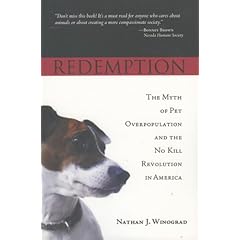
Redemption: by Nathan Winograd

Redemption is a fascinating account of the campaign to end the killing of healthy pets in American animal shelters.
I. Feral Cat TNR (Trap Neuter Return) Program
II. High-Volume, Low-Cost Spay/Neuter
III. Rescue Groups
IV. Foster Care
V. Comprehensive Adoption Programs
VI. Pet Retention
VII. Medical and Behavior Rehabilitation
VIII. Public Relations/Community Involvement
IX. Volunteers
X. A Compassionate Director
Friday, October 31, 2008
Thank-you, Dogsblog!
Thursday, October 30, 2008
Internet Resource on Trusteeship
More cats
A thin black and white female at Swayne's. She's tested FIV/FELV negative and they may have a possible home, which will be very welcome.
A young tortie/tabby female who was reclaimed by owner, but may involve us in a small bill for treatment up until the point where the owner contacted us.
Hissing Sid fortunately turns out to have normal thyroid hormone levels, and we hope he'll put on weight with regular meals and less exercise.
Wednesday, October 29, 2008
More cats
Tuesday, October 28, 2008
Watch out for deer on the roads
Justgiving three month trial
Online introduction to Justgiving from Lee @ Jg on Vimeo.
Sunday, October 26, 2008
Speaker meetings - any interest?
Would anyone out there be interested in speaker meetings which were organised at the other end of the scale (so to speak), purely for supporters (and anyone else interested) in our own local branch area?
The rather low attendance at our branch AGM suggests there's little or no interest in the purely administrative/organisational aspects of what we do, but would there be any support for periodic meetings with a speaker (probably from the inspectorate or one of the animal hospitals) as a chance for people from the branch to get together?
Friday, October 24, 2008
Congratulations to Hunts and March Branch
Back to the Future
- Planted with trees which cover at least 20% of the range
- The trees are a mixture of fast growing and slower native trees which are indigenous to the local area
- The trees are planted close to the house to encourage the hens outside to range
- All farms are audited and approved by the RSPCA and conform to the RSPCA Freedom Food standard
Thursday, October 23, 2008
Organic fertiliser free to anyone willing to collect
Strewth!
Wednesday, October 22, 2008
RSPCA Prosecutions
Heartwarming
"Please accept the enclosed cheque with our gratitude for allowing us to adopt Maddison. She has settled in incredibly well and won our hearts very easily. My other dog Chance adores her also because she will play with him continuously. When we lost Ziggy we thought our hearts would never heal, Maddison has proved us wrong"
Tuesday, October 21, 2008
Winter Fair 2008 on Mill Road
Monday, October 20, 2008
Entitlement culture
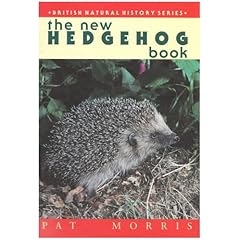
The New Hedgehog book

The New Hedgehog Book, by Pat Morris, is absolutely charming, but also packed with useful information about hedgehogs and what is known about their natural history and behaviour. Until his retirement, Pat Morris was a wildlife researcher and academic, but this is definitely not a coldly scientific view, and readers will be delighted by his evident fondness for his spiky research subjects — to the point of abandoning both clothing and objectivity and diving to the rescue when one of them was in imminent danger of a watery grave.
Sunday, October 19, 2008
Continuing saga of the dog with the prolapse
Going down the tube fast...
Friday, October 17, 2008
Horses of the Storm and Pawprints of Katrina


Horses of the Storm and Pawprints of Katrina are more accounts of the animal rescue operations which followed the Hurricane Katrina disaster in Louisiana.
Horses is mainly focussed on the efforts of the staff, students and volunteers of Louisiana State University's equine veterinary department and concentrates on the particular problems of rescuing horses and mules (although the LSU workers also saved a variety of other livestock and smaller domestic animals). Probably due to Ky Mortensen's professional position as a staff member of the University, Horses is less emotional than either Rescued or Pawprints and may therefore be more in tune with British tastes.
Thursday, October 16, 2008
What a complicated fortnight

Eight week old kitten (uninjured, but too small for our normal "if it's uninjured and healthy, leave it alone" rule) taken into Vet24 over the weekend. In the meantime, Fountain, one of the two kittens being fostered with a view to adoption, developed a runny nose and we organised transport so he could go to a vet on Monday. By then he was fine, but of course the transport volunteer couldn't alter all her other arrangements to collect the Vet24 kitten.
Wednesday, October 15, 2008
Freedom Food Eggs
"Freedom Food, however, says it is waiting to see evidence that there will be no detrimental effect on animal welfare. If that cannot be produced, it will continue with its stocking density limit of 1,000 birds per hectare."
"Leigh Grant, chief executive of Freedom Food, said the RSPCA was waiting to see the evidence that there would be no effect on animal welfare."The RSPCA has had very positive dialogue with the industry and it is asking the industry to provide evidence that this would not prove detrimental to animal welfare," he said. "The industry has agreed to run trials and the RSPCA is awaiting the result."My own personal position is that if the industry, working with the RSPCA, is able to arrive at a point where it can show that the change is not detrimental then I would be happy. However, I would not want the RSPCA to be influenced by commercial considerations."He said that when a product carried the Freedom Food logo that product carried an RSPCA endorsement, so it was inevitable that the RSPCA should be very sensitive about welfare considerations. The RSPCA had worked very hard with the industry over the years to help put free range where it was today and he hoped that co-operation would continue. He pointed out that a huge number of retailers - the majority of them - were with Freedom Food. If the industry was not able to provide evidence that a change in stocking density would not affect animal welfare then the Freedom Food standard would not be changed. Then there would have to be two separate standards and the retailers and their customers would have to make a choice."
Blog Action Day 08 - Poverty

Tuesday, October 14, 2008
German Shepherd case

Monday, October 13, 2008
Cash flow for September
Another poor month for the shops — overall profits are almost halved compared with 2007.
Sunday, October 12, 2008
Not so cool for cats
Very worrying."In August 2005, the charity identified that Kaupthing Singer and Friedlander, a UK bank, was a bank where it could invest with confidence as it had a high credit rating. Kaupthing Singer and Friedlander is owned by an Icelandic bank, Kaupthing. Consequently, some of Cats Protection’s cash reserves were placed with them on a 90 day arrangement. Our deposits amounted to £11.2 million.
The credit ratings of the various banks the charity uses are checked periodically and quite recently, Kaupthing Singer and Friedlander’s rating remained sound.“In the light of the demise of some major banking institutions, Cats Protection decided that it should diversify even further and on 17 September 2008, the charity gave 90 days notice to KSF of its intention to withdraw these deposits.“On Wednesday afternoon, 8 October, Cats Protection received news that the bank had been put into administration. Some of the deposits held within the Kaupthing bank group have been rescued under a deal set up by the UK treasury. However, at present the future of other deposits, CP’s included, is uncertain. Many local authorities and councils find themselves in similar positions and we and they are exerting pressure on the Treasury to act."
Thanks
Saturday, October 11, 2008
Ouch!
Vaginal prolapse looks very dramatic (which is why the owner's neighbours kept making complaints to us about it in spite of the fact that she had taken the dog to our clinic).
It resolves itself spontaneously between heats (so there's a bit of a tendency for an owner who is very pushed for cash to give a sigh of relief and hope it's gone away naturally).
It can't easily be surgically treated while the bitch is still in heat (the safest treatment is to spay her between seasons and put in some stitches to make sure the remaining vaginal tissue stays put where it ought to be).
Taxi drivers recoil in horror and won't have the bitch in their vehicles (so it's very difficult for a very low-income owner to actually get her to a vet for diagnosis and treatment).
Hardly any vets will do home-visits nowadays. We are extremely lucky that Clarendon St vets in Cambridge and Royston Veterinary Centre will do call-outs in their local area.
Collar injuries again
Friday, October 10, 2008
Apologies to anyone with one of our collecting boxes
Back to Square One
Thursday, October 9, 2008
Website Statistics
Rehoming Figures for September
Wednesday, October 8, 2008
Internet Resource on Animal Shelter Management
Questions from Shelter Medicine Overview Lecture, 04/04/2008
Kate F. Hurley
UC Davis Koret Shelter Medicine Program
Questions generally about shelter standards and regulation:"I didn't realize that local SPCAs were not affiliated with each other. I'm not sure if that's a good thing or a bad thing--I can see that it would be good to retain some regional individuality, and it probably creates less paperwork/bureaucracy that needs to be worked through. It's probably easier to implement changes, and easier to tailor what the shelter offers to the community. On the other hand, I wonder if it would be easier to get funding, and better for research purposes (easier to access a large amount of "herd health" data) if the shelters were associated.""Good point about the up and down sides of having all shelters linked. I was recently in England, where the vast majority of shelters are under one of their major charitable umbrella organizations. (Unlike here, all RSPCAs really are part of the same group, for instance.) The power of a large organization gave them broad recognition, seemingly lots of fundraising clout, the opportunity to collect and compare data between numerous shelters, and the ability to implement a set of standards that were generally impressively high in terms of animal housing, health and adoptions. On the down side, chatting with people it sounded like the organizations can be unwieldy to change, there are layers of bureaucracy, and it could be that it’s harder to respond to specific regional issues – likely more of an issue in the U.S. since we are such a large and varied country. Just as we’ve seen many individual veterinary practices absorbed into corporate chains or groups, it does seem possible that we will eventual see something like a large non-profit group operating multiple shelters on a franchise-type model – there are a few groups, such as the Massachusetts SPCA that do operate multiple shelters within a single state. However, I think it’s unlikely that we will ever see the kind of cohesive arrangement that exists in the United Kingdom, just because of the fractured and independent way that shelters sprang up on this side of the ocean. "
Tuesday, October 7, 2008
Madison's test results are back!
Monday, October 6, 2008
Training day
Sunday, October 5, 2008
Vomiting dogs again
These two puppies aren't insured or vaccinated and they're not registered either with the PDSA (for help with treatment at a local private vet) or with our own clinic in Cambridge — and in fact we wouldn't be able to have them admitted to the University Vet School who provide our hospital facilities because of the risk to their private patients.
I've agreed that we could help with the cost of giving the puppies intravenous fluids at the private vet, followed by home nursing by the owner, which will at least give them a chance.
Sadly, this is the situation we see over and over again. If you buy a puppy, ask for proof that the mother's vaccinations were up to date, and ensure that the puppy is vaccinated at 8 weeks (preferably by the breeder before leaving the mother) with a follow-up booster according to your vet's advice. Never, ever buy from an establishment where puppies are brought in from multiple sources — mixing different groups of puppies means spreading any infection. Make sure any adult dogs who will be in contact with the new puppy are up to date with their vaccinations. Take out pet insurance to cover vet bills, (or register the puppy with the PDSA, RSPCA or Blue Cross if you are on benefits and can't afford insurance).
Saturday, October 4, 2008
Rescued: Life-changing Stories of Saving Animals from Disaster

Rescued is the story of the individuals and organisations who took part in the evacuation of pets and livestock in the aftermath of hurricane Katrina.
It may be a little over-sentimental for British tastes, but the practical "lessons learned" and sections on what individual pet owners can do in the way of preparation to give their animals the best possible chance of surviving an emergency situation are of real importance.
We're fortunate in this country that large-scale disasters like Katrina are very unlikely, and we're also lucky not to have rabies (so we can handle animals of unknown health status with a degree of confidence the Katrina rescuers didn't enjoy). That doesn't mean we can't learn from this very large-scale animal emergency — for example the importance of micro-chipping to enable pets to be reunited with their owners; the value of having pre-existing teams of trained volunteers for essential roles such as assessing emergency foster homes (and what went wrong for groups who weren't able to do these checks).
Friday, October 3, 2008
Just to get the weekend off to a good start...
If you might be interested in adopting any of these dogs, please email rehoming@rspca-cambridge.org.uk
Cat saga continues
Lack of money is not an acceptable excuse for neglecting to seek treatment for a sick or injured animal. Anyone who is genuinely on a very low income can get help with the cost of treatment by contacting the RSPCA on 0300 1234 999 or the PDSA on 0800 731 2502 or the Blue Cross on 0300 123 9933
Anyone on means-tested state benefits in the Cambridge area can bring their animals to our clinic on Whitehill Road (next to the Abbey Swimming Pool).
Another stray cat
We always need more foster homes to provide more TLC for animals like this than is possible in boarding kennels. If you might be able to help, please email rehoming@rspca-cambridge.org.uk
Thursday, October 2, 2008
Cocoa is back!
Cocoa's history illustrates why some perfectly responsible owners end up having to give up pets after trying everything they can to solve the problem. Her epilepsy means that her house-training is sometimes erratic — this was something her previous owners could deal with until they had small children and the resulting hygiene worries became too much.
We always need caring homes willing to take "imperfect" animals who either have ongoing medical problems or are simply getting on in life. Where we know a medical condition will need continuing treatment we can usually help with the cost of this. If you might be able to offer a home to an animal like this; or if you might be able to help with temporary foster care for a recovering animal, please email rspcacambridge@aol.com
Wednesday, October 1, 2008
Working on it
Animal Clinic figures for September
Tuesday, September 30, 2008
Dog Flea Treatments and Cats again
Never give a cat any kind of medication intended for another species except on specific advice from a vet. Because they are specialist carnivores, cats are much less able to detoxify chemicals than most other animals.
Monday, September 29, 2008
Living with a House Rabbit

Living with a House Rabbit is written by Linda Dykes and Helen Flack, respectively the former and current chairmen of the Rabbit Welfare Association, and is an excellent introduction to keeping rabbits as indoor domestic pets. It provides realistic advice about the amount of potential damage event the best-behaved rabbits are likely to do, and ways to "bunny-proof" your home to strike a successful balance between freedom for the rabbits and preservation of reasonable domestic standards.
When successful, house-rabbits probably have better quality of life than pet rabbits kept under any other system, but all too often owners either become disillusioned and give their pets up for rehoming, or they end up condemning them to long periods confined to indoor cages which are very little better than outdoor hutches. If everyone thinking of having a rabbit as an indoor pet read this book before acquiring a rabbit we would have fewer requests to rehome the relationship failures and more rabbits would have better-quality lives.
Just one example of the kind of inspired tip the authors include is the suggestion that solid plastic dog beds make splendid litter trays for rabbits (particularly older ones whose joints may be getting a little stiff). The raised back and sides help prevent hay and litter scattering around, while the low front is easy for the rabbit to step over.
Sunday, September 28, 2008
Update on Fenella
"RSPCA Inspected"
"A leaflet, for Great British Circus, stated "THIS CIRCUS HAS BEEN RSPCA INSPECTED". The RSPCA complained that the leaflet misleadingly implied they had approved the circus.
Adjudication
Complaint upheld
THIS ADJUDICATION REPLACES THAT PUBLISHED ON 24TH MAY 2006. THE COMPLAINT REMAINS UPHELD BUT THE WORDING HAS BEEN CHANGED.
Great British Circus (GBC) said their leaflet neither stated nor implied that the circus was 'approved' by the RSPCA. They said they had been visited by the RSPCA and submitted photocopies of two pages from their visitors' book and a copy of an RSPCA animal welfare assessment form to show that. GBC believed that, because they had granted access to the RSPCA in the past, it was fair to inform the public of that.
The ASA noted GBC had, in the past, granted permission for the RSPCA to visit their circus to check the way in which they looked after their animals. Nevertheless, we considered that the presentation of the leaflet, showing two circus performers giving a 'thumbs-up' beside the text "THIS CIRCUS HAS BEEN RSPCA INSPECTED", implied approval by the RSPCA of the circus and the use of animals as performers in the circus. We concluded that the claim was misleading and told them to delete it."
There is more information about the RSPCA's position on circus animals on the national website.