Friday, November 7, 2008

Another traffic accident cat

He's an entire male, all black and picked up on Huntingdon road, Girton by ACO Justin. Justin was concerned that he might have a ruptured diaphragm as he seemed to be struggling to breathe, but the emergency vets have x-rayed him and think he's probably got away with a pelvic fracture and shock. They're going to give him fluids and stabilise him over the weekend then X-Ray again on Monday to confirm whether he can go out to a foster home for cage rest or if he needs to be transferred to our clinic for surgery.

I've just added him to our database of incoming stray cats and clicked Google's analyse form button. The result is very interesting, although it's only a small sample. All of the injured male cats without exception are entires. The sex ratio is slightly skewed in favour of females (9 females to 6 males).

I'm not surprised that neutering would reduce male cats' risk of being found injured or ill, but I am surprised at such a dramatic effect.

I suppose it could be that neutered males are more likely to stay close to home, so if they're hit by a car their owners are more likely to find them and take them to a vet themselves. Possibly owners who neuter are also more inclined to chip, so they'd be contacted by the emergency vet and the cat wouldn't enter our system.

It will be interesting to see figures over a whole year and find if there's any difference outside the breeding season.

Further thought

I'm wondering whether some of cats recorded as female could in fact be neutered males. There is a bit of a tendency for people to call any cat of unknown sex "she" and, faced with an obviously injured animal, gender identification isn't uppermost in most finders' minds. We have occasionally taken in cats and only identified their sex further down the line when one of us thought to up-end them and look, so it is possible that some of those who don't survive or are rehomed by the vet didn't belong to the gender that was originally reported.

It does underline the importance of checking out reports of found cats that don't match the details of a lost cat in every respect.

Internet Resources

Archie the cat's website documents Archie's recovery after injury to one of his hind legs meant it had to be amputated and shows how well cats can adjust to life on three legs. We have several three-legged cats up for rehoming and Archie's story may give some prospective adopters confidence that it should be no detriment to their quality of life.

The Interactive Bunny is a fun learning tool to encourage people to research what rabbits need before acquiring one as a pet. 

Thursday, November 6, 2008

Ghost: still looking

Unfortunately the home we thought we had found for Ghost didn't pan out, so he's still looking.

Request from Caroline

Caroline, who runs Rabbit Residence Rescue, has asked us to spread this message to parents who are thinking of buying a rabbit as a pet for their children:

"I have been running a rescue centre for unwanted pet rabbits for 14 years now. I started caring for 30 rabbits at any one time. In 2002 it was recorded that over 33,000 rabbits were abandoned each year in this country. This has sadly got worse and in 2005 The Rabbit Residence Rescue had to increase its space to care for 60 rabbits at any one time. Now in 2008 we have had to make space for 100 rabbits.

I am at my wit’s end with parents ringing me up asking me to take pet rabbits in because the children are no longer caring for them; the children have grown out of them or are bored of them. Rabbits can live for 10 years or more. They are not toys and if you are not interested in them as the parent DO NOT PURCHASE THEM. We are not here to pick up your pieces and should not be part of the equation when buying a rabbit."

Rabbits are now the third most popular pet (after cats and dogs), but they get a very raw deal because people do not properly appreciate their needs and how much work is needed to look after them correctly. Always remember that they are not "pocket pets" — a rabbit is as big as a cat or small dog and has similar needs in terms of exercise and mental stimulation.

Wednesday, November 5, 2008

Please Remember: Fireworks Frighten Animals

Sad update on ginger kitten

Unfortunately he died this morning. The Vet School think he probably had internal injuries which were causing the fluid bloating in his abdomen and breathing difficulties.

Tuesday, November 4, 2008

Update on ginger kitten

He's now walking about quite happily, so the vets are now thinking that he's not got anything broken and his initial reluctance to stand was just due to bruising and soreness. Fortunately he's tested FIV/FeLV negative, but they do think he's got some wound infection — possibly he was injured some time before the original finder came across him. They're giving him metacam to reduce his temperature and fluids and antibiotics to help him recover from the infection. 

Fingers crossed.

Consultation on Cat, Dog and Equine codes

DEFRA has just issued a consultation on the proposed codes for the welfare of cats, dogs and equines. Once completed, these codes will operate in conjunction with the Animal Welfare Act to enforce the duties of animal owners towards their pets, so their contents are extremely important.

Draft Codes (all PDFs)


I've only had time to read through the cat code so far and most of it looks excellent, although it goes a bit overboard on the idea that cats are completely solitary animals: that's true to some extent, but it's also true that female cats will raise their kittens in communal nurseries for protection from predators.

Monday, November 3, 2008

Another kitty

He's a 10-12 week old ginger kitten, and was picked up after being hit by a car. Finder didn't know the area, so couldn't give a good description of the location, but took quite a lot of trouble to get him to the 24 hour vet for emergency first aid. He's now fairly bright and interested in food, but they think he's probably got a cracked pelvis. They're hopeful that there isn't any spinal injury as he seems to have conscious control of urination.

Nicola is going to pick him up from Vet24 tomorrow morning and get him to the clinic for transfer to the Vet School Hospital. 

Sunday, November 2, 2008

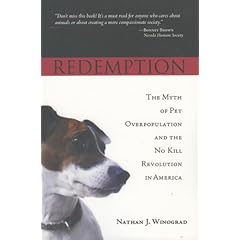
Redemption: by Nathan Winograd


Redemption is a fascinating account of the campaign to end the killing of healthy pets in American animal shelters.
From similar beginnings, animal protection societies evolved very differently in the US and the UK. In this country the RSPCA, Scottish and Ulster SPCAs remained comparatively separate from local authority dog wardens (and local authorities on the whole confined their activities only to stray dogs). In the US, local SPCAs almost invariably became the major agencies of "animal control" (usually with some financial support from the local authority) and ended up operating open-access shelters with a remit to take in any pet animals whose owners no longer wanted them. Until pet spaying and neutering became routine and safe operations, this inevitably meant that SPCAs spent much of their time and energy killing precisely the animals they cared about.
Sadly, the advent of safe fertility control methods did not lead to the rapid decrease in killing that might have been expected and Winograd lays out a very persuasive argument explaining why this is so and what the animal protection movement needs to do to achieve the objective of no destruction of healthy animals. Perhaps the most important message of his book is that caring for animals is not enough: saving pets' lives is impossible if the would-be animal rescuers lack empathy for human beings and drive away the very people who would choose to adopt shelter animals. The majority of pet owners are decent and want to do the right thing.
The second important message is the need for transparency and accurate documentation of statistics to show what is actually happening in animal shelters. Without such statistics it is impossible to make rational decisions: one reason why the killing continues is the belief that there is a huge problem of "pet over-population" and there are far more animals than available homes. In fact, Winograd argues, this has never been true for adult animals. There was a problem of annual surplus production of young animals and this has already been significantly diminished by owners choosing to get their pets neutered. So long as people keep pets there will be some who get into difficulties and have to relinquish their animals, but this is balanced by people who want to acquire pets. The job of animal shelters is to match up the two - if necessary providing support in terms of advice on training etc. Provision of low-cost and/or free neutering services is vital, but it is not sensibly viewed as a way of reducing the overall pet population but as a control on that population's production of young animals.
It would be very interesting to have a proper comparison of the US vs UK situation (possible PhD subject for an aspiring student?). The US shelters Winograd discusses are all open-access - i.e. the shelter is required to take any animal presented to it. By comparison virtually all UK shelters are "limited access" (they can refuse animals if they are full) and even the local authority dog wardens are only required to take dogs who are actually stray and running loose; they do not normally take unwanted dogs direct from their owners. This means that even the local authority shelters are virtually "no-kill" by US standards and charity shelters normally treat rather than euthanase even quite seriously ill or injured animals. It may be that this is just displacing the decision to euthanase from the shelter to the owner: we simply do not know.
The no-kill equation
I. Feral Cat TNR (Trap Neuter Return) Program

II. High-Volume, Low-Cost Spay/Neuter

III. Rescue Groups

IV. Foster Care

V. Comprehensive Adoption Programs

VI. Pet Retention

VII. Medical and Behavior Rehabilitation

VIII. Public Relations/Community Involvement

IX. Volunteers

X. A Compassionate Director

Friday, October 31, 2008

Thank-you, Dogsblog!

Since we registered with Dogsblog our rate of dog rehoming has dramatically improved - particularly for the older or more hard-to-place dogs. Ghost now has a home booked, after nearly a year in our care.

Thursday, October 30, 2008

Internet Resource on Trusteeship

The Suffolk Association of Voluntary Organisations (SAVO) has produced an online Trustee training site for anyone interested in becoming a charity trustee. The members of an RSPCA branch committee are all trustees of that branch, and most branches (including Cambridge) are always looking for new committee members. 

The SAVO site contains general-purpose information about the responsibilities of being a trustee and isn't specific to animal charites, but it is well worth working through.

If you might be interested in joining the committee of RSPCA Cambridge, please email secretary@rspca-cambridge.org.uk 

RSPCA Peterborough branch is also in desperate need of new trustees. If you might be interested in helping them, please email their Branch Development Adviser.

More cats

Another un-neutered tom waiting to be transferred from Lida vets to the kennels.

A thin black and white female at Swayne's. She's tested FIV/FELV negative and they may have a possible home, which will be very welcome.

A young tortie/tabby female who was reclaimed by owner, but may involve us in a small bill for treatment up until the point where the owner contacted us.

Hissing Sid fortunately turns out to have normal thyroid hormone levels, and we hope he'll put on weight with regular meals and less exercise.

Wednesday, October 29, 2008

More cats

Sid is another entire male, very thin, but fortunately FIV/FeLV negative. We're awaiting results of a test for hyperthyroidism, but with any luck it may turn out that he's just underweight because he's been spending summer roaming in search of females instead of eating properly. Nicola*, our main volunteer driver, collected him from the Whittlesford vets and moved him to the kennels yesterday.

Sadly, another tom-cat handed in at the Arbury Road vets wasn't so lucky. He had awful abscesses and the blood test showed that he was FIV positive (which explains why they had got so bad, as FIV - Feline Immunodeficiency Virus - eventually destroys the cat's immune system and means that infections won't be thrown off as they normally would in a healthy cat). As the abscesses were so bad the vets advised that we should agree to having him put to sleep. 

*Congratulations to Nicola on her first ever motorway journey since passing her test!

Tuesday, October 28, 2008

Watch out for deer on the roads

The clocks have gone back and now many wild animals will be at their most active during the high-traffic period when people are driving home. The videos below from the deer collisions project illustrate the problem. We usually have a surge of domestic animal traffic casualties around this time of year as well - again probably because of the change in time of greatest traffic flow relative to dusk.


Justgiving three month trial

We've just signed up for a three month trial of the Justgiving fundraising site. This is similar to Charities Aid Foundation, but has more functions (although its fees are a bit higher after the initial trial period). 

One of the options which Justgiving offers is fundraising pages to allow our supporters to raise money for us. This makes it possible to have online pages for sponsored walks, or to raise targeted funds for particular projects.


Online introduction to Justgiving from Lee @ Jg on Vimeo.

Sunday, October 26, 2008

Speaker meetings - any interest?

One of the discussion items at Saturday's Regional Board meeting was the question of why attendance at the Society's AGM is so poor. HQ recently sent a questionnaire to a fairly large sample of members and regular donors and from the answers, it appears that there's a fair amount of interest in hearing more about what the Society does, but that a large proportion of people are quite limited in terms of possible travelling distances.

Would anyone out there be interested in speaker meetings which were organised at the other end of the scale (so to speak), purely for supporters (and anyone else interested) in our own local branch area?

The rather low attendance at our branch AGM suggests there's little or no interest in the purely administrative/organisational aspects of what we do, but would there be any support for periodic meetings with a speaker (probably from the inspectorate or one of the animal hospitals) as a chance for people from the branch to get together?

Friday, October 24, 2008

Congratulations to Hunts and March Branch

The Hunts and March Branch of the RSPCA opened its new charity shop on Market Hill, St Ives on Monday.

The branch has spent years looking for suitable premises and will now be turning its attention to another outlet in St Neots.

Trustee and manager Jane Newbery said: "Due to the escalating costs of animal welfare the St Ives shop will be a welcome addition for the branch." There are many ways you can help the branch and its new shop – call 01480 467 497.

Back to the Future

The Federation of Woodland Egg Producers seem to be replicating something very similar to the conditions on the early 20th Century Chivers farms
  • Planted with trees which cover at least 20% of the range
  • The trees are a mixture of fast growing and slower native trees which are indigenous to the local area
  • The trees are planted close to the house to encourage the hens outside to range
  • All farms are audited and approved by the RSPCA and conform to the RSPCA Freedom Food standard
Maybe this is the way to go to maintain standards in a time of financial hardship. Planting trees in areas which would otherwise be either grass or bare ground is a potential way of soaking up CO2 and eventually producing wood for fuel or construction, and the dual use of land answers the objection to free range that there is not enough available land to produce all the eggs needed to supply the consumer.

Thursday, October 23, 2008

Organic fertiliser free to anyone willing to collect

If anyone in the South Cambs. or N. Herts area could make good use of some manure (and is willing to collect it) Rabbit Residence Rescue would be delighted to hear from you, as their muck heap is growing and it costs money if they have to get it taken away by a contractor.

Strewth!

I've now got a new branch cheque book, so I can set the ball rolling to open an investment account with a local building society. 

The most straightforward logistics to achieve this seem to be for me to post out the application form to our Rehoming Co-ordinator (so she can fill in her details as Second Applicant).

She then posts the form on to our Branch Secretary.

Meanwhile I write out a cheque for the opening deposit and take it round to the Secretary for her counter-signature. She can also counter-sign the cheque for the deposit with the Co-Operative Bank at the same time.

Once she has the cheque, form and a copy of our Branch Rules, she takes them down to her local branch of the building society together with her ID.

And once that's been done, the Rehoming Co-ordinator can call in at the building society to prove who she is.

Meanwhile we need to take a copy of the signed minutes of this month's committee meeting and send it to the building society to prove we really did decide to open an account.

Wednesday, October 22, 2008

RSPCA Prosecutions

I came across the RSPCA's evidence to the Select Committee on Environment, Food and Rural Affairs' inquiry into the draft Animal Welfare Bill and I think it's worth quoting some of the detailed explanation of how the RSPCA Inspectorate and the Prosecutions Department go about investigating cruelty complaints. 

The passage into law of the Animal Welfare Act doesn't significantly change the way this works, although it has made it possible to intervene earlier where animals are being kept in unsuitable conditions. The transcript of the oral evidence puts it into one huge paragraph, so I've spaced it out to make it a bit more readable. 

If you page through the whole of the original source, you'll see some explanation of the Society's branch structure in relation to the Inspectorate (scroll down to find it), and some statistics on conviction rates which are relevant to the File on 4 allegations:

Mr Flower (RSPCA Superintendant Prosecutions dept.): Yes. All of the prosecutions launched by the RSPCA are as a private prosecutor. If the Bill becomes law that position will not change. We will still be a private prosecutor. You are probably aware that, although the Crown Prosecution Service was set up in 1985, the law specifically provided and allowed the preservation of the rights for private prosecutions to continue, and we are a private prosecutor. 

The way our inspectors work at the moment to bring about private prosecutions is this: generally we receive a large number of complaints alleging the cruel treatments of animals from the public—last year it was in the region of 105,000. 

Our inspectors investigate all of those complaints; they check on the welfare of the animals; they try and determine whether an offence may have been committed. In investigating complaints our inspectors require the co-operation of animal owners because the RSPCA inspectors have no statutory powers, so if an inspector wants to see an animal he is invited into the premises by the owner. 

If the inspector believes that an offence may have been committed because he is confronted with an animal in a very poor condition, then he will strive to take the animal to a veterinary surgeon for examination because we rely on the veterinary surgeon to provide evidence that the animal has been caused to suffer. 

If an owner is not co-operative and will not allow an inspector access or the removal of an animal, then we are obliged to enlist the assistance of the police, because the police do have certain powers under current law in relation to arrest and seizure of items of evidence, but we only need to call on the police in very limited circumstances. 

If the inspector then has evidence that there is a potential offence and the opinion of the veterinary surgeon is that the animal has suffered, the inspector will then proceed to investigate with a view to compiling a file of evidence. This will comprise witness statements, expert evidence, photographs, and the owner of the animal will be given the opportunity to be interviewed. 

The interview is conducted in accordance with the provisions of the Police and Criminal Evidence Act, so the accused is cautioned and advised that they have the opportunity to seek legal advice before speaking. They are also told that they have the opportunity to have their animal examined by a veterinary surgeon of their choice in order that they have the opportunity to have an alternative opinion on the state of the animal. This is all done partly to comply with statutory provision, and partly to be fair to the accused. 

Once the investigation is completed the file of evidence is sent to the Prosecutions Department. There are five staff there who assess all of the cases that arise in England and Wales. The Prosecutions Department adheres to the provisions of the code for crown prosecutors when assessing the file of evidence. There are two principal tests, as you probably know. 

One is that there must be sufficient evidence to make a conviction more likely than an acquittal if the case is prosecuted, and there must also be a public interest in prosecuting, and all of the decisions that the RSPCA makes with regard to prosecution are based on those criteria. 

Although we are probably one of the biggest private prosecutors, prosecution is a very small part of our inspectorate's work. I mentioned that last year inspectors investigated about 105,000 complaints. The number of cases submitted to Prosecutions Department was about 1,400. Of that 1,400 we prosecuted about 700-800—about 50%, so I think this demonstrates that we are not, as some people may suggest, just out to secure convictions at all cost. 

We assess cases carefully and we apply the appropriate tests before we prosecute. That is why our prosecution numbers are so low. Although we are careful with our prosecutions, we do have a very high success rate. Last year the number of convictions we secured from our prosecutions was about 96% which is a significant success rate. 

I believe another criticism that may have been levelled is the fact that there is no form of accountability as far as our prosecutions are concerned. I think the example was cited that the police investigate offences but the Crown Prosecution Service decides whether to proceed and that is some sort of safeguard, but the position of the RSPCA is no different from any other non police prosecutor. There are plenty of them, from British Rail to British Waterways, TV licensing and local authorities will occasionally prosecute, but the CPS do not have responsibility for assessing cases brought by non police prosecutors. 

If a suggestion is made that RSPCA cases should go to the CPS to be assessed then that is a misleading suggestion because the CPS does not have the authority to prosecute for anyone other than the police. The position of private prosecutions was considered in 1998 by a Law Commission report and that concluded that there were adequate safeguards in place to ensure the right to bring private prosecution is not abused. Those sort of safeguards include the DPP having a right to intervene [if a prosecution has been brought inappropriately].

Heartwarming

Really nice letter today from the family who adopted Maddison, one of the four German Shepherds, (not just because of the very kind enclosure):
"Please accept the enclosed cheque with our gratitude for allowing us to adopt Maddison. She has settled in incredibly well and won our hearts very easily. My other dog Chance adores her also because she will play with him continuously. When we lost Ziggy we thought our hearts would never heal, Maddison has proved us wrong"

Tuesday, October 21, 2008

Winter Fair 2008 on Mill Road

We'll be taking part in the Mill Road Winter Fair again this year, so look out for our tombola (outside the shop at 188 Mill Road) and book stall (location tba) if you're in the area on 6th December.

If you might be able to help with either of the stalls, please email camshop@rspcabookshop.co.uk. The book stall is usually under cover, but the tombola is in the area in front of the shop, so we'd like to have enough helpers to give people a chance to have a break and get warm.

Monday, October 20, 2008

Entitlement culture

Long argument with a caller who disagreed with the amount she was charged at our clinic and grandly claimed that, "it's the law that disabled owners can't be charged if their pets need veterinary treatment". 

It is not.

Vets have an ethical obligation to relieve animal suffering under the terms of the oath they swear when they qualify. Unfortunately this doesn't translate into unlimited free treatment for owners who can't afford to pay. If an animal is actually in the surgery and is in pain, no vet will refuse to relieve this, and most will in fact bend over backwards to avoid euthanasia, but at the end of the day vets have to charge an economic fee in order to stay in business.

The PDSA have a strict policy to determine who is poor enough to qualify for help and they limit help to no more than one or two animals per owner. The people who meet their criteria do receive very generous help. 

We have a more flexible approach, but this means our help is spread more thinly and owners are expected to pay at least a third of what the treatment would cost at a private vet. This isn't an entitlement: if our funds run out we can't demand that the government tops them up.

This was a basically good owner (she did seek treatment and she did pay up) who had acquired more animals than she could afford in the belief that if things went wrong someone else would have to deal with it. 

The next step down the scale is the owner who essentially gives up and says, "The vet won't see my pet because I owe them money," and then doesn't do anything about getting treatment. In their mind it's now the vet who is responsible if the animal suffers. 

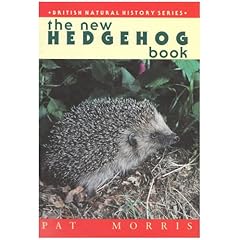
The New Hedgehog book


The New Hedgehog Book, by Pat Morris, is absolutely charming, but also packed with useful information about hedgehogs and what is known about their natural history and behaviour. Until his retirement, Pat Morris was a wildlife researcher and academic, but this is definitely not a coldly scientific view, and readers will be delighted by his evident fondness for his spiky research subjects — to the point of abandoning both clothing and objectivity and diving to the rescue when one of them was in imminent danger of a watery grave. 

Without overwhelming readers with information The Hedgehog book gives enough knowledge to enable them to provide real assistance to any wandering hogs which they may come across. It will also promote understanding of the point at which well-meaning help can turn into something that merely prolongs the process of dying if the would-be rescuer doesn't recognise their limitations.

Some aspects of this popular mammal remain surprisingly mysterious. Create a feeding station for stray cats and you'll end up with lots of cats. This doesn't seem to apply to hedgehogs: you may think there are a lot, but it turns out that you may simply have created a drop-in centre for hedgehogs from an astonishingly large area, rather than increasing the number living in your own garden. Food supply doesn't seem to be the critical limiting factor and we don't really know what is, although there are suspicions that tidier, smaller gardens with more fencing and fewer deciduous trees are bad news. 

The book provides an update on the controversy over hedgehogs on Uist and explains why RSPCA wildlife hospitals (like our local East Winch) place so much emphasis on measuring survival rates of treated animals after release to the wild. Careful follow-up of translocated hedghogs was able to demonstrate it was incorrect that removing hedgehogs and releasing them elsewhere was inhumane, and (to their credit) Scottish Natural Heritage were prepared to change their policy in response to the evidence.

The BBC has a video of another hedgehog tagging survey in action. 

Sunday, October 19, 2008

Continuing saga of the dog with the prolapse

She had her surgery last Wednesday but my sigh of relief was a bit premature. Owner phoned yesterday afternoon to say she was very dull and not eating or drinking. Unfortunately, because we got the op. done by the private Clarendon Street vet (as her owner didn't have any way to get to the Madingley road site) and it was now the weekend, the closest available cover was the 24 hour vet at Milton. Managed to arrange for her to be taken there, and fortunately it seems she's simply uncomfortable because of the double operation (to replace the prolapse and spay her to stop it happening again). This morning she's gone back home on stronger pain-killers and the vets say she's bright and lively.
Very relieved, as, although vaginal prolapse looks horrible, it's not actually life-threatening or hugely painful (although it's probably pretty uncomfortable). I would have felt really bad if we'd pushed the owner to get the operation done and the bitch hadn't survived.
Fingers and toes crossed that nothing else happens.
NB: this is why I need to have a mobile phone. MI5 are welcome to listen in, but they would be very bored after a bit.

Going down the tube fast...

If this turns out to be true, I'm not going to be able to replace the branch emergency contact mobile phone either - it's an elderly pre-payment Nokia mainly used by me to provide a means for clinic patients to contact us for veterinary help outside normal working hours. It's also the most convenient way to provide a 24/7 branch contact for emergency help with the cost of seeing a private vet. Bother, bother, bother.

Friday, October 17, 2008

Horses of the Storm and Pawprints of Katrina


Horses of the Storm and Pawprints of Katrina are more accounts of the animal rescue operations which followed the Hurricane Katrina disaster in Louisiana.

Horses is mainly focussed on the efforts of the staff, students and volunteers of Louisiana State University's equine veterinary department and concentrates on the particular problems of rescuing horses and mules (although the LSU workers also saved a variety of other livestock and smaller domestic animals). Probably due to Ky Mortensen's professional position as a staff member of the University, Horses is less emotional than either Rescued or Pawprints and may therefore be more in tune with British tastes.
Pawprints concentrates on the work of Best Friends Animal Society and the emergency animal refuge which it set up to receive pets rescued from the flooded areas of New Orleans (the author, Cathy Scott, has a blog on Amazon.com). Pawprints is more of a collection of heart-warming stories, than a detailed analysis, like Rescued, and if you're looking for "lessons learned", then Rescued is probably the better buy.
One common theme in all three books is the absolutely vital importance of micro-chipping as a method of permanent animal identification which cannot be lost and poses no risk. The second major lesson is preparedness: animals whose owners were organised to leave the danger area with them had the best chance of survival, but even the small amount of time needed to release horses from tethers and stalls was enough to give them a better chance of reaching safety by swimming. Horses has a fairly detailed appendix on emergency preparedness for horse-keepers, much of which would also be applicable to the UK.

Thursday, October 16, 2008

What a complicated fortnight


Eight week old kitten (uninjured, but too small for our normal "if it's uninjured and healthy, leave it alone" rule) taken into Vet24 over the weekend. In the meantime, Fountain, one of the two kittens being fostered with a view to adoption, developed a runny nose and we organised transport so he could go to a vet on Monday. By then he was fine, but of course the transport volunteer couldn't alter all her other arrangements to collect the Vet24 kitten. 

Re-arranged transport to get her to the kennels today — by which time the vets had managed to find someone who wanted to adopt her anyway. Excellent news, apart from messing the poor transport person about again, as we really don't like holding young animals in kennels because of the effect on their socialisation. 

Madison and Emily should be moved to the kennels next Monday (unless something else happens) as they're now fighting fit and ready to be shown to adopters. Lomas is booked in for his X-ray at the Vet School the same day and we are all praying that he'll be able to have his fixator removed so that we don't have any more panics.

Wednesday, October 15, 2008

Freedom Food Eggs

This article in the FarmingUK online magazine about changes to the Lion code for the "free range" label is both interesting and depressing — and demonstrates the part Freedom Food plays in keeping the developing welfare-audited food market honest. 
"Freedom Food, however, says it is waiting to see evidence that there will be no detrimental effect on animal welfare. If that cannot be produced, it will continue with its stocking density limit of 1,000 birds per hectare."
"Leigh Grant, chief executive of Freedom Food, said the RSPCA was waiting to see the evidence that there would be no effect on animal welfare.

"The RSPCA has had very positive dialogue with the industry and it is asking the industry to provide evidence that this would not prove detrimental to animal welfare," he said. "The industry has agreed to run trials and the RSPCA is awaiting the result.

"My own personal position is that if the industry, working with the RSPCA, is able to arrive at a point where it can show that the change is not detrimental then I would be happy. However, I would not want the RSPCA to be influenced by commercial considerations."

He said that when a product carried the Freedom Food logo that product carried an RSPCA endorsement, so it was inevitable that the RSPCA should be very sensitive about welfare considerations. The RSPCA had worked very hard with the industry over the years to help put free range where it was today and he hoped that co-operation would continue. He pointed out that a huge number of retailers - the majority of them - were with Freedom Food. If the industry was not able to provide evidence that a change in stocking density would not affect animal welfare then the Freedom Food standard would not be changed. Then there would have to be two separate standards and the retailers and their customers would have to make a choice."
So, we could potentially be seeing a situation where "Free Range" labelled eggs could be from hens stocked at twice the density of hens producing eggs under the "Freedom Food" label. (In fact, my reading of the article is that this may already be the case, but the higher-density wouldn't be eligible for the "Lion" quality label.

I can see that there must be pressure to maximise production of food per acre of land. Arguably the ultimate way to do this would be to grow plants for direct human consumption, but people are likely to want to consume eggs for the foreseeable future. Maybe the answer is a return to the older system of poultry flocks in orchards (scroll down to see Chivers' then cutting-edge pedigree flock, just down the road from Cambridge). 

In fact Chivers must have been an absolutely wonderful example of integrated farming for maximum productivity per acre as they seem to have had bees as well as poultry so that their orchards were producing honey, eggs and fruit from a single piece of land. So far as it's possible to tell from the photos, their hens had at least as much space as the best modern free-range farms, and probably better welfare since chickens are naturally woodland birds.

Blog Action Day 08 - Poverty


The Cambridge Clinic

The RSPCA is not simply "the animal police". With 34 clinics and 172 branches which offer financial help for owners on low incomes, we are at least as much about helping owners to keep their animals and care for them properly as we are about preventing bad or incompetent owners from having animals.

The Cambridge RSPCA clinic at 1 Pool Way, Whitehill Road, Cambridge is open for general treatments on Tuesdays, Thursdays and Saturdays and on Wednesdays for vaccinations, pre-neutering checks and stitch removals. We start booking people in at roughly 8.30 a.m. and don't accept any further bookings for the morning at 10.30 a.m. The vets begin examining animals just after 9 am.

Treatments are not free, but cost roughly a third of what a private vet would have to charge, and we accept anyone on means tested state benefits or very low income (defined as less than £200 per week household income). Proof of income status must be shown at each visit.

Tuesday, October 14, 2008

German Shepherd case


By coincidence, I had a call from Maddison's adopter to update us on her progress on the day the court case against her previous owners was finalised, and Storm, the remaining one of the four dogs was signed over to us for rehoming.

He's supposed to be her litter brother, but we wonder if he's actually older, as he's still in much poorer condition than she is. He's very friendly, but still quite a bit thinner than he ought to be. If you might be interested in adopting him, please email rehoming@rspca-cambridge.org.uk

Monday, October 13, 2008

Cash flow for September

Our income for September was £18,868, and expenditure £15,680, so there was a net surplus of £3,998 for the month. However, this was skewed by receipt of the £9,289 payment for reclaimed input VAT relating to the annual payment to the University Vet School for clinical services during 2007 which we made in April. 

Another poor month for the shops — overall profits are almost halved compared with 2007.

When combined with the figures for the number of animals handled by us in the same month, you'll see how the cash flow figures demonstrate that the amount of money available per animal is quite low. We would have no more than £50 available for each animal even if we had no overheads (shop rents etc.) at all.

A brief explanation of how VAT works in relation to charity activities is probably in order. We have to pay output VAT to the Inland Revenue on services (such as our animal clinic) for which we make a charge and which are not VAT exempt. We can reclaim the VAT which is included in charges we pay to our suppliers (such as the University Vet School) to enable us to provide those services. 

A normal business would charge its customers more than it pays its suppliers (or go bust) so, because VAT is calculated as a percentage of VATable charges, its reclaimed VAT would always be less than the VAT owed (so it would have to make a net payment to Inland Revenue every quarter).

We subsidise our clinic services, so we charge clinic users less than it costs us to run the clinic, and this means that the VAT we owe is less than the VAT which is included in the charge made by our suppliers. This means the Inland Revenue owe us money at the end of a quarter (effectively we have overpaid them) and we get a refund four times a year.

At present this is very welcome.

Sunday, October 12, 2008

Not so cool for cats

Cats Protection have put out a statement about their investments in Iceland:
"In August 2005, the charity identified that Kaupthing Singer and Friedlander, a UK bank, was a bank where it could invest with confidence as it had a high credit rating. Kaupthing Singer and Friedlander is owned by an Icelandic bank, Kaupthing. Consequently, some of Cats Protection’s cash reserves were placed with them on a 90 day arrangement. Our deposits amounted to £11.2 million.

The credit ratings of the various banks the charity uses are checked periodically and quite recently, Kaupthing Singer and Friedlander’s rating remained sound.

“In the light of the demise of some major banking institutions, Cats Protection decided that it should diversify even further and on 17 September 2008, the charity gave 90 days notice to KSF of its intention to withdraw these deposits.

“On Wednesday afternoon, 8 October, Cats Protection received news that the bank had been put into administration. Some of the deposits held within the Kaupthing bank group have been rescued under a deal set up by the UK treasury. However, at present the future of other deposits, CP’s included, is uncertain. Many local authorities and councils find themselves in similar positions and we and they are exerting pressure on the Treasury to act."
Very worrying.

Some people seem to be taking the view that CP shouldn't have had reserves of that size in any case, and it's worth pointing out that (like us) they handle thousands of cats every year — and also help low income cat owners with vouchers for pet neutering and grants towards emergency vet bills. It's a lot of money, but spread over that number of cases, it doesn't represent a huge amount per individual cat. Setting up a new shelter doesn't leave much change out of several million pounds when you consider that a suitable site could cost at least half a million and would require at least as much again to kit it out with suitable buildings. Even paying just the minimum wage staff costs would be at least £80,000 p.a. to have a rotation to cover holidays and time off and still have someone on the premises 24/7.

Thanks

To the staff and customers of Borders Books for raising £28.44 towards our local animal welfare work from their collecting boxes at the Market St. branch. This would enable us to provide four low-cost pet treatments at our animal clinic.

Saturday, October 11, 2008

Ouch!

This does look sore, although I imagine they selected the most dramatic case they could find to get a good photo. Having seen it, I have a better understanding of the drama surrounding a clinic client whose dog has the condition, and which I hope and trust will very soon be sorted out.

Vaginal prolapse looks very dramatic (which is why the owner's neighbours kept making complaints to us about it in spite of the fact that she had taken the dog to our clinic).

It resolves itself spontaneously between heats (so there's a bit of a tendency for an owner who is very pushed for cash to give a sigh of relief and hope it's gone away naturally).

It can't easily be surgically treated while the bitch is still in heat (the safest treatment is to spay her between seasons and put in some stitches to make sure the remaining vaginal tissue stays put where it ought to be).

Taxi drivers recoil in horror and won't have the bitch in their vehicles (so it's very difficult for a very low-income owner to actually get her to a vet for diagnosis and treatment).

Hardly any vets will do home-visits nowadays. We are extremely lucky that Clarendon St vets in Cambridge and Royston Veterinary Centre will do call-outs in their local area.

Collar injuries again

Just as Grace and Madison were having their re-checks at the clinic, there was a frantic phone-call from a clinic client who had just found her cat in a shed, caught by her collar, after being missing for three weeks. Amazingly the cat was still alive, but her frantic struggles to free herself had embedded the collar in the flesh under her foreleg. The vet on duty sent her straight over to the hospital, where they'll probably have the cat on a drip over the weekend to rehydrate her and do the surgery to remove the remains of the collar and stitch the wound on Monday.

Friday, October 10, 2008

Apologies to anyone with one of our collecting boxes

I've been dilatory about getting the boxes in Cambridge emptied and counted because of the number of cats I'm currently fostering and needing to take to and from the vet on Saturdays. I hope normal service will be resumed (as they say) as soon as possible.

Peter is doing sterling work overseeing collecting boxes in the Newmarket area. If you have a shop or other suitable location for an RSPCA collecting box in that area, please email Lorna (newmarket@rspcabookshop.co.uk) and she'll pass on the message.

Back to Square One

Bother! It turns out that I do not possess any identification which NatWest will accept as proof of identity for the purpose of opening an interest-bearing deposit account to run alongside the branch's current account. 

This is not a complete disaster as they are prepared to open an account with three other branch trustees as signatories. I could operate this by filling in the transfer slips and getting the others to sign to authorise them. Fortunately there seems to be no question of withdrawing my ability to sign cheques for payment from the current account — which must be a relief to the 20-odd veterinary practices we deal with. It's aggravating, though, as it means we are back to square one with the multi-page form to open the deposit account. 

The conversation with the NatWest employee was pure farce, as the poor woman grew progressively more desperate with suggestions about possible suitable sources of ID: firearms certificate? Wait fifteen years until I have a pension book? Certificate of naturalisation? Learn to drive (provisional license won't do)?

At least our funds are in a bank that shows no signs of dying on us, although I would be happier if I could speed up the process of splitting them up into £50,000 chunks in separate organisations so that all the money was covered by the savings guarantee.

Thursday, October 9, 2008

Website Statistics

According to Google Analytics, our main site www.rspca-cambridge.org.uk is averaging just over a thousand unique visitors per month, mostly roughly evenly split between searchers interested in the rehoming pages and ones looking for information on help with the cost of veterinary treatment. 

So... it looks as though the web is serving us well in terms of animal welfare and improvements to our rehoming rate, but is possibly less useful as a tool for recruiting new volunteers. 

This diary gets roughly a hundred unique visitors per month — with a smaller percentage of completely new visitors than the main site, which suggests it's serving a useful purpose as a way of keeping in touch with our regular supporters.

Rehoming Figures for September

Fortunately adoptions seem to be moving again, after a scary drop during July and August. Eight cats, two dogs, one cockatiel, five guinea-pigs and a hamster out, two dogs booked (awaiting home-visit). 

No signs so far of any increase in animals being handed over because of evictions, but it looks as if more people are feeling the pinch and asking for help with veterinary treatment.

Wednesday, October 8, 2008

Internet Resource on Animal Shelter Management

The University of California Davis Koret Shelter Medicine Program site is mainly intended for their own veterinary students, but is a fantastic resource for anyone interested in learning more about proper animal care in rescue conditions.

The site includes downloadable copies of their class lecture notes and links to videos and "webinars" where animal shelter professionals can discuss shared problems and solutions online. UK readers do need to bear in mind that US conditions are sometimes different from ours — some diseases found here don't occur over there and vice versa, for example. However many of the issues (trapping and neutering feral cats; behaviour assessment and temperament tests; assessing prospective animal adopters and so on) are relevant to both sides of the Atlantic.

Some interesting comparisons of the organisational structure of the RSPCA in this country compared to the US in one of the introductory lectures:
Questions from Shelter Medicine Overview Lecture, 04/04/2008
Kate F. Hurley
UC Davis Koret Shelter Medicine Program
Questions generally about shelter standards and regulation:

"I didn't realize that local SPCAs were not affiliated with each other. I'm not sure if that's a good thing or a bad thing--I can see that it would be good to retain some regional individuality, and it probably creates less paperwork/bureaucracy that needs to be worked through. It's probably easier to implement changes, and easier to tailor what the shelter offers to the community. On the other hand, I wonder if it would be easier to get funding, and better for research purposes (easier to access a large amount of "herd health" data) if the shelters were associated."

"Good point about the up and down sides of having all shelters linked. I was recently in England, where the vast majority of shelters are under one of their major charitable umbrella organizations. (Unlike here, all RSPCAs really are part of the same group, for instance.) The power of a large organization gave them broad recognition, seemingly lots of fundraising clout, the opportunity to collect and compare data between numerous shelters, and the ability to implement a set of standards that were generally impressively high in terms of animal housing, health and adoptions. On the down side, chatting with people it sounded like the organizations can be unwieldy to change, there are layers of bureaucracy, and it could be that it’s harder to respond to specific regional issues – likely more of an issue in the U.S. since we are such a large and varied country. Just as we’ve seen many individual veterinary practices absorbed into corporate chains or groups, it does seem possible that we will eventual see something like a large non-profit group operating multiple shelters on a franchise-type model – there are a few groups, such as the Massachusetts SPCA that do operate multiple shelters within a single state. However, I think it’s unlikely that we will ever see the kind of cohesive arrangement that exists in the United Kingdom, just because of the fractured and independent way that shelters sprang up on this side of the ocean. "
Continuing the ringworm theme from yesterday, there's an online presentation on ringworm control in animal shelters with useful pictures of infections (and other conditions which can look similar). It's interesting to see that the cat cages in the shelter they show wouldn't be acceptable in our units except for cats needing to be closely confined for medical reasons, such as fractures or heart problems.

The really striking difference between us and the States is cats — we don't declaw and we do expect they'll normally have more or less free access to the outdoors. Most US animal welfare agencies deprecate declawing, but are absolutely vehemently opposed to letting cats roam freely outside.

Tuesday, October 7, 2008

Madison's test results are back!

Madison is a very pretty long-haired black cat who was picked up as an injured stray on 14th September after being hit by a car. She had a lot of soreness and bruising which has almost healed, except that she still can't hold her tail completely upright, but she also had dreadful skin trouble, with bald patches which we originally thought were grazes from the accident. After initial first aid at Vet24 and admission to the Vet School hospital it became obvious that the sores were skin disease, rather than injuries. She was infested with fleas, so the most probable underlying source of the problem was flea allergy, but (especially in a long-haired cat) another possibility would have been ringworm.

Ringworm is very bad news indeed for any animal rescue. University of California Davis' Shelter Medicine Program has some detailed information which explains just why we are so paranoid about it. A rescue facility which has had an outbreak will be out of action for a minimum of four months while all animals are treated (twice weekly medicated baths for all cats!).

Anyway, Madison's culture results came back today and she has NOT got ringworm — just very nasty flea allergy, which is responding nicely to treatment. Relief all round.

Monday, October 6, 2008

Training day

The Cambridgeshire branches (Cambridge, Peterborough and Hunts & March) are planning to hold a training day for new volunteer home visitors within the next few months. If you might be interested in this, please email rehoming@rspca-cambridge.org.uk

Home visitors play an essential part in helping to achieve a successful match between our animals and prospective new homes. They're not trying to catch people out, or pry into their domestic circumstances, but they make simple checks to ensure new owners have suitable conditions to keep the type of animal they want to adopt (as an example we do insist on a secure fenced exercise area for dogs). They also have a general informal chat to satisfy themselves that the new adopters appreciate the work and responsibility involved in caring for a pet and answer any questions about the process of adopting from the RSPCA.

Sunday, October 5, 2008

Vomiting dogs again

Yet another owner with two young, recently-acquired puppies with vomiting and diarrhoea with blood in it. It is enormously expensive to treat puppies like this effectively, because the vets have to set up barrier nursing if they admit them as inpatients. She's been quoted £300 per day, which in fact isn't unreasonable of the vet when you consider the cost of a veterinary nurse's salary; vet's salary and of completely disinfecting their isolation facilities (plus the initial costs of building an isolation unit at the practice).

These two puppies aren't insured or vaccinated and they're not registered either with the PDSA (for help with treatment at a local private vet) or with our own clinic in Cambridge — and in fact we wouldn't be able to have them admitted to the University Vet School who provide our hospital facilities because of the risk to their private patients.

I've agreed that we could help with the cost of giving the puppies intravenous fluids at the private vet, followed by home nursing by the owner, which will at least give them a chance.

Sadly, this is the situation we see over and over again. If you buy a puppy, ask for proof that the mother's vaccinations were up to date, and ensure that the puppy is vaccinated at 8 weeks (preferably by the breeder before leaving the mother) with a follow-up booster according to your vet's advice. Never, ever buy from an establishment where puppies are brought in from multiple sources — mixing different groups of puppies means spreading any infection. Make sure any adult dogs who will be in contact with the new puppy are up to date with their vaccinations. Take out pet insurance to cover vet bills, (or register the puppy with the PDSA, RSPCA or Blue Cross if you are on benefits and can't afford insurance).

Saturday, October 4, 2008

Rescued: Life-changing Stories of Saving Animals from Disaster

Rescued is the story of the individuals and organisations who took part in the evacuation of pets and livestock in the aftermath of hurricane Katrina.

It may be a little over-sentimental for British tastes, but the practical "lessons learned" and sections on what individual pet owners can do in the way of preparation to give their animals the best possible chance of surviving an emergency situation are of real importance.

We're fortunate in this country that large-scale disasters like Katrina are very unlikely, and we're also lucky not to have rabies (so we can handle animals of unknown health status with a degree of confidence the Katrina rescuers didn't enjoy). That doesn't mean we can't learn from this very large-scale animal emergency — for example the importance of micro-chipping to enable pets to be reunited with their owners; the value of having pre-existing teams of trained volunteers for essential roles such as assessing emergency foster homes (and what went wrong for groups who weren't able to do these checks).

Friday, October 3, 2008

Just to get the weekend off to a good start...

Thirteen dogs signed over from an address in Newmarket. RSPCA West Suffolk have kindly offered to take the mother staffie bitch and her puppies as they have a suitable foster home where the pups will get proper socialisation rather than being in kennel conditions. We're taking four adult dogs (all friendly, young adult females) — a Belgian Shepherd, Husky cross, Rhodesian Ridgeback and an Akita.

If you might be interested in adopting any of these dogs, please email rehoming@rspca-cambridge.org.uk

Cat saga continues

The ACO's managed to find the tortie's owner, but it's now a probable neglect case as the owner was aware the cat was ill, but hadn't tried to get any treatment for her (in fact hadn't even tried any over the counter treatment to get rid of her fleas).

Lack of money is not an acceptable excuse for neglecting to seek treatment for a sick or injured animal. Anyone who is genuinely on a very low income can get help with the cost of treatment by contacting the RSPCA on 0300 1234 999 or the PDSA on 0800 731 2502 or the Blue Cross on 0300 123 9933

Anyone on means-tested state benefits in the Cambridge area can bring their animals to our clinic on Whitehill Road (next to the Abbey Swimming Pool).

Another stray cat

She's an elderly tortoiseshell and was collected by one of our ACOs from Milton road, Cambridge, after a caller reported that she'd been hanging around for several days and looked ill. She's been admitted to Cambridge Veterinary Group for assessment and treatment and at this stage it looks as though she's got heart failure and dehydration (plus loads of fleas!).

We always need more foster homes to provide more TLC for animals like this than is possible in boarding kennels. If you might be able to help, please email rehoming@rspca-cambridge.org.uk

Thursday, October 2, 2008

Cocoa is back!

This is not another microchip success story, as she's returned under her own steam and I've no idea where she's been for the past two days or what she's been up to. I'm hugely relieved however as she's on medication for epilepsy and I was begining to fear that she'd gone off to die somewhere.

Cocoa's history illustrates why some perfectly responsible owners end up having to give up pets after trying everything they can to solve the problem. Her epilepsy means that her house-training is sometimes erratic — this was something her previous owners could deal with until they had small children and the resulting hygiene worries became too much.

We always need caring homes willing to take "imperfect" animals who either have ongoing medical problems or are simply getting on in life. Where we know a medical condition will need continuing treatment we can usually help with the cost of this. If you might be able to offer a home to an animal like this; or if you might be able to help with temporary foster care for a recovering animal, please email rspcacambridge@aol.com

Wednesday, October 1, 2008

Working on it

Still trying to open a deposit account. Latest hurdle is that all the people listed as signatories for the current account need to prove who they are again by providing photo-identification and a recent utility bill showing their name and address. This in spite of the fact that the current account's been open since at least the 1950s and all the signatories have been on the account for the past three years.
Also working on the lease of 61 Burleigh street - the shop premises we hope to move into so we can expand our charity shop. Landlord is reluctant to accept that we're willing to pay either a premium or consider a rent rise, but not both (and certainly not in the current economic climate when they should think themselves lucky to have a potential tenant at all).

Animal Clinic figures for September

In September, our Animal Clinic treated 209 dogs, 129 cats, five rabbits and three miscellaneous other animals.

Tuesday, September 30, 2008

Dog Flea Treatments and Cats again

Yet another owner with a £300+ bill from the emergency vet after treating her two cats with over the counter anti-flea "spot-on" insecticide intended for dogs. She's on income support, so we're helping with £100 towards the total and she's borrowed £200 from her family.

Never give a cat any kind of medication intended for another species except on specific advice from a vet. Because they are specialist carnivores, cats are much less able to detoxify chemicals than most other animals.

Monday, September 29, 2008

Living with a House Rabbit

Living with a House Rabbit is written by Linda Dykes and Helen Flack, respectively the former and current chairmen of the Rabbit Welfare Association, and is an excellent introduction to keeping rabbits as indoor domestic pets. It provides realistic advice about the amount of potential damage event the best-behaved rabbits are likely to do, and ways to "bunny-proof" your home to strike a successful balance between freedom for the rabbits and preservation of reasonable domestic standards.

When successful, house-rabbits probably have better quality of life than pet rabbits kept under any other system, but all too often owners either become disillusioned and give their pets up for rehoming, or they end up condemning them to long periods confined to indoor cages which are very little better than outdoor hutches. If everyone thinking of having a rabbit as an indoor pet read this book before acquiring a rabbit we would have fewer requests to rehome the relationship failures and more rabbits would have better-quality lives.

Just one example of the kind of inspired tip the authors include is the suggestion that solid plastic dog beds make splendid litter trays for rabbits (particularly older ones whose joints may be getting a little stiff). The raised back and sides help prevent hay and litter scattering around, while the low front is easy for the rabbit to step over.

Sunday, September 28, 2008

Update on Fenella

Took Fenella to the clinic for a re-check yesterday and was delighted to find she's gained a kilo - up from 2.1 kg to 3.1 kg - which is probably now about the right weight for her general build and age. She's still got her third eyelids partially up and the vets think this is probably permanent and due to having had untreated cat flu when she was tiny, but we're trying a course of eye ointment to see if there's any improvement.

"RSPCA Inspected"

We're periodically criticised by animal rights groups who believe that we "approve" circuses and, as an animal circus is touring locally, it may be worth explaining once more that this is not the case. An adjudication by the Advertising Standards Authority explains:
"A leaflet, for Great British Circus, stated "THIS CIRCUS HAS BEEN RSPCA INSPECTED". The RSPCA complained that the leaflet misleadingly implied they had approved the circus.

Adjudication

Complaint upheld
THIS ADJUDICATION REPLACES THAT PUBLISHED ON 24TH MAY 2006. THE COMPLAINT REMAINS UPHELD BUT THE WORDING HAS BEEN CHANGED.

Great British Circus (GBC) said their leaflet neither stated nor implied that the circus was 'approved' by the RSPCA. They said they had been visited by the RSPCA and submitted photocopies of two pages from their visitors' book and a copy of an RSPCA animal welfare assessment form to show that. GBC believed that, because they had granted access to the RSPCA in the past, it was fair to inform the public of that.

The ASA noted GBC had, in the past, granted permission for the RSPCA to visit their circus to check the way in which they looked after their animals. Nevertheless, we considered that the presentation of the leaflet, showing two circus performers giving a 'thumbs-up' beside the text "THIS CIRCUS HAS BEEN RSPCA INSPECTED", implied approval by the RSPCA of the circus and the use of animals as performers in the circus. We concluded that the claim was misleading and told them to delete it."
If you see a circus including animal acts which claims to have been "RSPCA inspected" in its advertising materials, it would be helpful to let our Headquarters have copies of any leaflets or posters with details of when and where the circus visited. The address to send them to is RSPCA, Wilberforce way, Southwater, Horsham, West Sussex RH13 9RS

There is more information about the RSPCA's position on circus animals on the national website.

Friday, September 26, 2008

Vicious circles and Virtuous ones

One reason why some people take on more than they can cope with is fear that the animals may be put down if they are handed over to an animal welfare organisation. Conversely, some welfare organisations argue that "limited access" animal shelters, where animals are never put down to make space for more admissions, may mean more euthanasia in the long run if owners decide to have their animals put down rather than wait until space is available. By US standards the RSPCA would be entitled to call itself a "no-kill" organisation — one which does not put down animals capable of rehabilitation.

Once things have got out of control, owners may be deterred from seeking veterinary help by lack of money and fear that approaching the RSPCA or PDSA might lead to prosecution instead. This is actually most unlikely — in about 20 years I can only think of two cases where our clinic reported an owner to the Inspectorate as a result of them bringing an animal for treatment. One was a case where the owner's boyfriend had deliberately broken their dog's leg and the other was a dog whose collar had been put on when he was a puppy and left until it had grown into his neck over a period of months. Someone who seeks help reasonably quickly would never be reported even if the vet might privately feel they'd been irresponsible or inefficient. Most of the time, someone who phones the RSPCA for help with veterinary treatment (rather than visiting a clinic) won't actually meet anyone from the organisation in person, but will be given help with the cost of going to a private vet.

Thursday, September 25, 2008

Stocktake


Maddison has been rehomed (a big thank-you to her adopter for a generous donation in addition to her adoption fee) and Ben and Wee Man have been reserved. Poor little Ghost is still looking. Many thanks to dogsblog for organising national dog adoption month. Without their support it's very doubtful whether we would have easily found good homes for the two older ones. One Syrian hamster and two of the kittens (Lynx and Tiger) have also been rehomed.

The little dog in the photo is Titch, an elderly chihuahua, whose owner was a client of our animal clinic and sadly could no longer care for Titch because his own ill-health meant lengthy periods in hospital.

Wednesday, September 24, 2008

File on Four last night

If anyone is concerned that we are all going round madly reporting innocent people for child abuse, I suggest they read the whole of the London Safeguarding Children Board's draft (repeat, draft) protocol for exchanging reports of suspected ill-treatment between animal- and child-protection professionals. Virtually always, child neglect reports by RSPCA inspectors relate to situations where they're called to investigate animals being kept in squalor and find that the family also has children living in the same conditions.

The program editors also didn't seem convinced of the truth of animal hoarding as a welfare problem. To put it in perspective, I suggest taking a look at the pet-abuse.com database of animal cruelty reports (US, UK, Canada, Australia, New Zealand, Spain). Select "hoarding" as type of abuse to view news reports of cases. (Their database seems to be most current for US cases and to have trouble resetting between searches of different countries unless you restart your browser).

The trouble with this sort of program is that it discourages people who do realise they need help with their animals from contacting animal welfare organisations.

Internet Resource

Continuing on the theme of things where we can learn from the US, there is a fantastic resource at the Office of the State Veterinarian of the State of Virginia which allows you to compare statistics from all state-registered animal shelters. Accurate data to find what is actually going on is at least a first step towards ending the euthanasia of healthy animals.

Tuesday, September 23, 2008

Update on Grace

Grace had her check-up at our clinic on Saturday and her heart rate's down from over 200 to 150 - almost normal. Her weight's up from 1.7 kg to 1.8, which is excellent progress after just a week on her thyroid hormone reducing tablets. Nothing at all wrong with her sight, but she seems to be almost completely deaf - which is why I can't get her to look nicely towards the camera by making squeaky sounds. However, the photo does show the unusual squiggly mark down the centre of her face.

Monday, September 22, 2008

Lost and found animals

The experimental form for notifying us about missing cats has turned out to be a useful way to collect the information in one place, so I've now added two others: 

www.rspca-cambridge.org.uk/reportfinding.html which is intended for non-urgent information about animals which may be strays (or are probably strays, but can't be caught). 

PLEASE DO NOT use this form for animals which are injured or in distress. If an animal appears ill or injured you should phone our control centre on 0300 1234 999

We will normally only check the database containing information collected from this form if someone contacts us to say they've lost an animal. It is not intended as a way to ask for help.

www.rspca-cambridge.org.uk/otherlost.html is intended to notify us if you've lost an animal. It's important that you also phone round local vets and animal shelters and contact our control centre (0300 1234 999) as injured animals will usually be taken to the closest available private vet if they need first aid.

We take in large numbers of injured and sick stray cats and very rarely manage to re-unite them with their owners. One probable reason is that people whose cats go missing do not appreciate that animals picked up injured may have to be moved quite large distances to arrange for their treatment and follow-on care. If an animal is injured during the night or at weekends it will be taken to one of the vets who provide out of hours cover; so it's important to ask your local vet who provides cover when they are closed and check with them as well.

Sunday, September 21, 2008

Pet Food Politics - just out

Just finished reading Pet Food Politics: the Chihuahua in the Coal Mine - rather horribly topical in view of the current tragedy in China over babies dying of kidney failure due to adulteration of milk formula with the chemical melamine.

Pet Food Politics is a serious documentary which really does read like a thriller and explains how a combination of greed, dishonesty, incompetence and sheer inability to trace the complexity of global markets in food products led to the death of pets in Canada and the US. The villains of the piece used the same adulterating chemicals that caused the deaths of babies in 2008.

Fortunately pet food companies in the UK were either more careful, or just luckier.

Evidently it was "luckier" (update 5th Oct. 2008).

One very interesting observation which Marion Nestle makes is the potential value of the animal health data which pet insurance companies collect as a side effect of their business. One of the first pieces of real evidence that there was a problem with US pet food was the observation of one insurance company that claims for treatment of kidney disease in cats had soared in March 2007. Clearly there are all kinds of other posible ways similar information collecting could benefit pets - for example we could get unbiased evidence of the real extent of the problem with pedigree dogs.

Marion Nestle has her own blog at whattoeatbook.com.

Farm Animal Welfare Week 22-28 September

Calculate your Farm Animal Welfare Footprint here.

Hoarding re-visited

There's a very interesting explanation of how animal "hoarding" cases are dealt with in the US just out, which is worth quoting in full:

"If we receive a hoarding case that shows no intent.. that means the individual has mental health difficulties, then we're likely going to go with City Ordinance violation charges," said Director of Fort Wayne Animal Care and Control Belinda Lewis.

Those are mostly fine-based, and can limit that person's future legal animal ownership. Intent to harm, however, is more severe, and means the person wanted to abuse and neglect animals.

"We're going to look at criminal charges. It's not the most common direction because we rarely see intent with animal hoarding cases," Lewis said.

She says animal hoarding cases are usually the result of mental health issues.
Psychiatrist Dr. Jay Fawver explains that can stem from one of three things.

"A recent loss, such as a job loss, or a child moved away. Secondly, if there's a profound grieve from a death in the family," said Dr. Fawver.

The third involves neglect dating back to that person's childhood.

"You're trying to reverse that whole history by giving a lot of love and compassion to animals. They're well meaning when they start out, but the problem is they aren't able to keep up," said Fawver.

In Elizabeth Miller's case, they believe she didn't have intent to harm the animals, which is why she's only facing fines. That's the same situation for a case earlier this summer in Leo, where 212 cats were found inside a home. How things get so bad is largely handled in counseling, as is ways to prevent it from happening in the future.

They're apparently achieving this by creative use of a distinction between "criminal" activities and violations of local bye-laws, so it's not obvious that it would be possible to do something similar in the UK without a change in the law.

Tip: The Animal Hoarding Blog (mostly American)