Tuesday, November 30, 2010

Video showing some of the work of our clinic


Sadly, Star, the cat featured in the video, suffered heart failure a few weeks after it was filmed. He was given treatment at the Vet School as an inpatient, but died shortly after admission.

Heart problems are a common complication of an over-active thyroid (which is what was wrong with Star), because basically the whole of the cat's metabolism starts running at an excessive rate. This can overload the heart and weaken it.

Monday, November 29, 2010

Rabbits galore

An un-neutered male (presumably their dad, but what happened to mum???) and eight baby rabbits in from one of the Hertfordshire villages we cover.

Two strays from the Newmarket/Ely area and an abandonment at one of our local vets, mean that all our foster accommodation is now full up and we will have to use relatively expensive commercial pet boarding facilities if any more come in.

If your rabbit has gone missing, please email our rehoming co-ordinator in case one of them is yours.

Stray rabbits are quite often reported to us, and we take in any that can be caught as they are very vulnerable to predators and also at risk from myxomatosis. Often catching them is virtually impossible as rabbits are not easily attracted using food as bait because grass is everywhere.

Sunday, November 28, 2010

61 Burleigh Street shop closed Monday 29th November

The RSPCA shop at 61 Burleigh Street, Cambridge will be closed all day on Monday 29th November so we can reorganise the sales space and put up our Christmas decorations.

We'll be open as normal from Tuesday 30th, with lots of extra rail space for clothes. We depend on you to keep the donations coming so we can fill all of it (please!)

If you're having a pre-Christmas clear-out, we can raise funds from any textile items, even ones that are completely worn out, as these can be sold for recycling. 

Saturday, November 27, 2010

Bookshop looking festive


Apologies for the rather gloomy picture of Sharon; the light inside the shop isn't really bright enough for non-flash photos in late afternoon.


Many thanks to the volunteers who worked so hard decorating the shop: it looks wonderful.

Lots of cards and inexpensive gifts inside and enough books to tide the most addicted reader over the festive season.

Thursday, November 25, 2010

Rabbit Hutches/Runs

Does anyone out there have a rabbit hutch and/or run of a decent size that's in reasonable condition and that they no longer want? We have a new rabbit fosterer who needs to be kitted out with suitable accommodation. 

He already has one run that would be suitable for rabbits if a hutch was set up inside it for the rabbits to be shut in at night for safety, so a hutch on its own would still be useful.

Experimental news aggregator

The RSPCA official press officers and several RSPCA branches are now on twitter. The summary below is from Paper.li - a news aggregation service that will combine tweets from specified accounts into a daily report. Note that this is all done by a machine, not a human, and occasionally some of the headings selected are a little strange: Why does it think DogLost should go under "Entertainment"?

The adverts that are included are by Paper.li and presumably are what generates their income.


Tuesday, November 23, 2010

Nice to hear from one of our "EARS" pensioners

Ghost when he was in our kennels
Most of the time I groan when I open an envelope and it's yet another vet bill, but this time it was actually quite pleasing (at only £36) to know that Ghost is still pottering along and enjoying life in his adoptive home.

He's now had slightly more than two years of good life since being adopted (and hopefully more to come), and we feel that our decision to persevere with him has been vindicated. There's always a worry with older animals that keeping them in kennels long-term isn't doing them any favours if there's no realistic prospect of a decent future before them.

Some animals are clearly going to be slower to find new homes than others, particularly if they have the double disadvantage of belonging to an over-popular breed and being a little "over the hill" age-wise.

Where adopters may be put off because of the prospect of age-related vet bills it may be possible to arrange adoption under the "EARS" — Elderly Animals Rehoming Scheme, whereby we will cover part of the cost of veterinary treatment after adoption.

Monday, November 22, 2010

Novelty squirrel nutcrackers

Nutcracker
I don't know how effective this little chap is at cracking nuts, but he's very cute.

Recently donated to our Burleigh St. Charity shop.

Sunday, November 21, 2010

Stray dogs

The National RSPCA website has a news item on the concern that dog warden services are likely to be selected for cutbacks. There are some indications that simply abolishing a statutory service as a cost-saving measure is being considered by some politicians—Hammersmith and Fulham's website bluntly states that "Passing the responsibility for stray dogs onto the RSPCA" would save council funds.

Which would be all very well if we really did have limitless funds, which we do not.

It may help if I give a bit of background to explain the current legal situation in relation to stray dogs.

Until 2008, responsibility was shared between the local authority and the Police. The LA was expected to run a dog warden service during normal working hours (9-5 Mon-Fri), while the Police would take in dogs brought to police stations outside those times, or when a dog warden was otherwise not contactable.

The LA was responsible for arranging kennelling for at least 7 days, after which the dog would either be transferred to a rescue organisation, rehomed directly or put to sleep.

In 2008 responsibility was transferred to the local authority, although instead of the dog warden service being expanded to cover 24/7, most LAs simply made some kind of arrangement for "drop-off" points where stray dogs could be taken. The major problem with this is that many people who find stray dogs don't have suitable transport, whereas at least some of them could have walked to their local police station.

Stray dogs never were "the responsibility" of the RSPCA, although most branches take in some dogs from LA kennels; sometimes after the 7 day period is up, and sometimes directly from the dog warden. Sometimes dogs may be taken in directly from the public, either because they're found injured, or because they're in danger, but most animal centres can't take in dogs round the clock. Branches like us which rehome from private boarding kennels can't reasonably expect the staff to turn out at all hours except in very exceptional emergency situations.

I get an impression that many people often believe that the local authority holding kennels are "the RSPCA"—probably in some circumstances because the LA and RSPCA both board dogs at the same private kennels.

We don't ourselves as a branch routinely take in stray dogs from local authorities, although we're occasionally asked to take a dog to save his life and would do our best to stretch funds to accommodate one in that situation.

It looks as though we may be facing a situation in which we are being asked to take up more and more work that's being offloaded from elsewhere.

In which case fundraising has to be our highest priority at the moment. It is no good complaining that we are "all about money". Without money we can't pay vets bills or buy cat and dog food. We can save some costs by getting animals into foster homes, but realistically we still need to use boarding facilities for some animals.

Monday, November 15, 2010

Can anyone offer a home to Charlie?

Charlie was handed in to the police and was  going to be put down because his 7 days were up, so we were asked to take him on.

He's a Staffordshire cross, but gets on well with other dogs. 

There's more information about him on our Rehoming Gallery.

UPDATE: Just to remove any misunderstanding; we stepped in to SAVE Charlie—the 7 day time limit is the statutory length of time a local authority is required to pay kennelling fees for unowned dogs. Once this time limit is up a dog may be passed on to a rescue organisation (us in this case), rehomed directly, or put to sleep.

Sunday, November 14, 2010

Animal Welfare Statistics for October

During October our clinic treated 213 dogs, 117 cats, 3 rabbits and 4 miscellaneous "small furries", and also neutered 12 dogs and 5 cats - a welcome sign that interest in neutering is picking up again.

We rehomed 4 cats, 1 dog and 1 rabbit.

In the total year to date we've provided 3,595 treatments for sick animals, neutered 215 animals and rehomed 94 animals. Of animals taken in for rehoming, only 8 had to be put to sleep on veterinary advice.

RSPCA Cambridge photo-mugs now available

Branch photo-mugs

The mugs come in two different designs: cats or dogs (sorry, no rabbits this time). Both designs feature animals rehomed by the branch during the past year.

They're now on sale, priced at £4.75, at our second-hand bookshop, 188 Mill road, and will also be available at various stalls we're doing in the run-up to Christmas. We make 99p profit on each mug, which will be ploughed back into our rehoming program.

Thursday, November 11, 2010

Paying vet bills in austerity Britain

Increased charges for veterinary treatment are very likely to be one knock-on effect of the drive to reduce public spending. Training to be a vet requires a six year course—potentially meaning a newly qualified vet could have a debt of £54,000 if he or she trained at a university that charged the maximum £9,000 p.a. 

The increased cost of becoming a vet is inevitably going to end up being passed on to animal owners, because vets have to survive and pay their mortgages like anyone else.

If you have a reasonable income and only a few pets, it makes sense to take out pet insurance. Read the small print and discuss it with your vet as some policies may be more suited to your particular circumstances than others. Be aware that pre-existing conditions will not be covered, and it may be difficult to get cover for older animals at all. Look for a policy that will give continued cover as your pet ages, and check the size of the "excess" which you will have to pay yourself for each illness. If this figure is more than you would be able to find the policy will not be much use! Check whether the company will pay your vet direct or if you will be expected to pay the whole cost then claim it back.

Some vets offer "in-house" insurance which may be a good buy as such policies often give discounts on the cost of routine treatments, such as annual vaccinations, and they usually mean you do not have to pay the full cost of treatment and claim it back.

If you have a large number of animals it may be more cost-effective to pay a set amount of money into a savings account each month and use that to cover the cost of vet bills. If you decide to do this you need to have the will-power not to dip into this emergency fund for any other expenses.

If you know you couldn't afford pet insurance and you couldn't pay for treatment at a private vet if your pet was ill you need to make plans to decide what you would do to safeguard their welfare. 

The RSPCA, PDSA and the Blue Cross all have schemes to help low income pet owners, but there is no guarantee that this will be available in your local area—although the RSPCA does its best to ensure at least minimal help is available throughout England and Wales.

Don't assume that there will always be a free or low-cost animal clinic available in your locality; it may well be the case that the only help available will be a voucher for part-payment at a private vet. More help may be available if you have registered your animal with the charity before an emergency arises, because this will make it possible for them to check your proofs of low income.

Tuesday, November 9, 2010

Branch Volunteers Meeting

Put a note in your diaries.

The next informal RSPCA Cambridge volunteers meeting will be on 18th November at our charity shop, 61 Burleigh Street, Cambridge. 7.30pm start.

All welcome, coffee and biscuits provided. We will be continuing to plan our fundraising diary for the run-up to Christmas and the following year.

Next year will be the 75th anniversary of an RSPCA clinic in Cambridge and we need to fundraise hard to ensure it continues to provide a service over the next 75 years!

As the cost of veterinary treatment continues to rise, the clinic becomes more and more important for very low income pet owners in this area. At the same time the costs involved in running the clinic are also increasing and there are times when we feel we are on a treadmill with no way off.

In the current economic climate it's unlikely that we can increase donations of cash, so it's ever more important that we develop fundraising activities like events and shops which also benefit those who spend money in terms of entertainment or good value bargains.

Sunday, November 7, 2010

More on the "feed-in" to the branch from RSPCA frontline activities

If you're following RSPCA_Frontline you'll have seen that the staff responded to 1,442 complaints and collections on 2nd November. One of these was in our branch area and was a concern over a pet that had been noticed limping. An inspector visited the owner and advised them that the animal needed to be seen by a vet. 

As it turned out that finance was an issue, the owner was given details of the veterinary services provided by our branch and told to contact us for help. They did this and the animal was seen and treated.

This is why it's so important for us to continue providing a service to local owners who may not be very organised or competent. It's far better to Prevent cruelty than prosecute afterwards.

Saturday, November 6, 2010

Beautiful walnut wardrobe donated to our shop

The photo doesn't do it justice, but this is a really attractive antique wardrobe, kindly donated to us together with a large amount of other furniture, including a lockable bureau and various tables.

All now available at our charity shop at 61 Burleigh Street, Cambridge.

Many thanks to the kind donor.

Friday, November 5, 2010

Christmas mug designs sent off

Just approved the designs for this year's limited edition, must-have, Christmas animal mugs, featuring photos of some of the animals we've rehomed during 2010.

Cats design
Dog design
They should be available at our bookshop at 188 Mill Road from mid-November at £4.75 each. Our supporters' Christmas presents sorted, I hope.

Incidentally I'd be grateful for any feedback on how people feel about using pics of actual rescue animals. I do try not to feature any that might be upsetting for fosterers or adopters—for example if an adopted cat was run over and died. I do wonder how someone might feel if they suddenly came across a photo of much loved animal years down the line after they'd grown old and died? 

Wednesday, November 3, 2010

Mystery Cat

In case you've missed it, the National RSPCA has a new twitter feed: RSPCA_Frontline, illustrating a selection of real incidents being responded to by RSPCA Inspectors and Animal Welfare Officers.


It's well worth looking at to get some idea of the sheer number of incidents staff are called to investigate, and also the inconclusive nature of many of them - for example call-outs to injured, but mobile, wild animals which are impossible to find.

For many of the incidents which actually do have an outcome of some kind, the local branch forms the next step in dealing with a problem. As a nice example, the final tweet for 1st November was:

"On 01/11/10 our officers were allocated 2093 incidents to attend. Good night."


Each of the 2093 incidents is given a log number so that it can be retrieved from the computer system at a later date, and lo, and behold, a cat is now sitting in the emergency vet in Milton with number 17** - fairly close to the tail end of the day. She's a feral cat who's been trapped and taken there by a member of the public, using a trap loaned by one of the inspectors. 

This was initially a complete mystery to us because the first we knew about her was a call from the vet asking what we wanted to do with her. There followed a daft conversation reminiscent of James Herriot and the dog who was "pretty lively" because we'd got no idea why someone thought she needed to go to a vet, and none of the vets fancied putting his hand inside the cage to do an examination. Best guess was that someone wanted her spayed, but it might have been need for a dental or something entirely different as the person who borrowed the trap seems to have assumed the vet would know. 

The only information the surgery had was her log number and the system does work, because I was able to phone in to the control centre and discover that she was being fed by an elderly lady who had to go into hospital and the person who took over the feeding was concerned her fur was very matted. No-one seems to know for sure whether or not she's been spayed (or has been having kittens) and the plan is to de-matt her under sedation and look for a spay scar at the same time. If she's not got a scar they'll do the spay operation.


Callers who are very concerned about individual animals sometimes think we're over-bureaucratic and causing delay when we insist on administrative details such as log numbers and post codes. The sheer numbers of animals handled by the RSPCA each day mean it's impossible to rely on memory and we have to record information in a systematic way. This cat was a perfect example—without her log number it would have been impossible to track back and verify that the people feeding her are happy to have her back on site. That's hugely important for her future welfare as she's completely unsuited to long-term confinement in a cattery and will have a much better quality of life in the familiar surroundings from which she came.

Friday, October 22, 2010

Cats! Help urgently needed

We have just been notified of the existence of a large colony of cats who may need to be moved because the site where they are living is due to be re-developed.

We'll have more details when we've had a change to speak in depth to the person who contacted us, but it's likely that we will need:
  • Suitable sites (e.g. stables, barn, large garden) for pairs of neutered adult cats who have been used to living outside.
  • Foster homes for kittens needing socialisation.
  • Volunteers willing to help with trapping cats and transporting them to the vets for neutering.
  • Help with funds to cover the costs.

Wednesday, October 20, 2010

If anyone had doubts that there are problems with some pedigree dogs

Take a look at this news article about a Shar Pei who needed surgery to cut back the folds of skin which meant she couldn't see. This dog appears to be a very extreme case as the more common problem is that puppies have eyelids which "don't fit properly" and cause the lashes to turn in and rub against the cornea of the eye. The writer seems a little confused about the distinction between problems like this, where the fault lies in the breed requirement for excessively folded skin, and those caused directly by the process of inbreeding between dogs who are too closely related.

There's more information about the procedure known as "tacking": stitching the eyelid so that it rolls away from the eye, and, as always, sensible comment from vet Pete Wedderburn.

What is the sense of paying £500 for a puppy who is going to need nearly £1,000 of surgery in less than a year to correct the genetic defects for which you paid your £500 in the first place?

Sunday, October 17, 2010

Branch animal welfare statistics for September

During September our clinic treated 272 dogs, 125 cats, 9 rabbits and 3 miscellaneous "small furries." We rehomed 2 dogs, 7 cats and 2 rabbits. Neutering figures were down—only 11 dogs and one cat—which may be a danger sign that people are trying to economise by waiting longer to get kittens neutered.

In the year to date we've provided a total of  3,258 low-cost veterinary treatments and rehomed 88 animals.

Wednesday, October 13, 2010

Next Volunteers' meeting

Thursday 21st October, 7.30-9.30pm at our Charity Shop, 61 Burleigh Street.

Anyone interested in the work of the RSPCA is very welcome to come. There will be a discussion on planning our fundraising timetable for the coming year, so please be prepared to put forward any suggestions for events and activities you would like to see.

Sunday, October 10, 2010

Homeless animals and homeless people

One of the major reasons for animals becoming homeless is human housing problems. Families may be forced to give up their pets if they are unable to find rented accommodation which will allow animals, or sometimes pets (generally dogs) may end up living on the streets together with their owners. The Dogs Trust maintain a list of shelters for the homeless with facilities for people with dogs. 

In many ways "street life" is not a dreadful hardship for dogs, unless they are either very young or very old,  because contact with their human partners is the most important thing in a dog's life. Disaster may strike if the dog is injured, perhaps through fighting with other dogs in a hostel, becomes pregnant, or is too young to be protected by vaccination. If a dog does need veterinary help it may be difficult or impossible for a homeless owner to organise transport from a hostel in Cambridge City Centre to our clinic's location in the housing estates in the North of Cambridge. This is another urgent reason why we need to raise enough funds to re-start our help at private vets for owners who genuinely cannot manage to get to the clinic.

Sunday, October 3, 2010

Sore eyes

Star waiting to alight from the catmobile
One of the regular visitors to our clinic is a lovely lady with a little dog, who also feeds all her local stray cats. As she has mobility problems and no transport she gets very upset if any of them are poorly because she really doesn't have any easy way to get them in a basket and take them to the vet herself. She's also a bit of a worrier, so my heart rather sank when I had a phone call around 10pm on Friday.

In the past she's had me out on searches for at-risk feral chickens, possibly injured muntjac deer and various cat and dog problems and the weather was absolutely chucking it down outside, so I was relieved that this time she seemed to think the morning would be good enough.

Got there just before ten and kitty was obligingly waiting to show off his eyes, which were indeed looking sore, so I popped him in a basket and off to the clinic. He really is an extremely laid-back cat and let the students take a blood sample with no problems at all. He's thin, although he's been eating ravenously, so he may be hyperthyroid; we'll have to wait for the blood results to come back and in the meantime he's in my spare cat pen with a prescription for eye ointment.

He is neutered, so someone obviously was looking after him at one point, and it is possible that he does have a home and was only looking for extra food because he has a medical problem.

Sickening Story

The Daily Mail has a really upsetting report on a woman who drowned eight cats and tried to excuse herself by saying she didn't have enough credit on her mobile phone to call an animal charity to try to get the cats rehomed.

In this case,  she doesn't even seem to have tried to ask for help, but whenever we do turn people away there is always a nagging worry that they will simply leave the animal to suffer or deliberately do it harm.   

There are the owners who insist they won't contact any of the vets local to them because none are any good—my cynical alter ego says they've run up debts with all of them and know they won't be seen.

One of our inspectors gave me some very wise advice: "Always remember it is ultimately the owner who is responsible for an animal. We did not create the situation."

We have an obligation to give what help we can, but we can't let ourselves be manipulated into feeling we are responsible for everything and we must never say no. 

If we go down that route we will either go under because we run out of money or wind up taking in every animal and putting most of them down because we think no-one but us can be trusted.

It comes back once again to prioritising urgency and getting it right. There are owners who just need a small amount of help, or a reminder of their responsibilities, and there are those who simply are not capable of making reasonable decisions and whose animals need to come in to our care. Identifying which is which is what RSPCA Animal Welfare Officers are trained for.

Friday, October 1, 2010

Shops' Progress

Daily profit of our Burleigh Street shop
To get a feel for how we're doing I worked out the average daily profit for the Burleigh Street Shop over the past three months. August was pretty depressing, but this is probably only to be expected because it's the last month of real summer. Most people have got all the summer clothes they want until next year, but it's too early for them to feel like buying for the colder months.

Profit for the a month is now hovering round the £1,000 mark — enough to cover half of our usual bill for boarding animals until they can be rehomed or half the monthly cost of running our clinic. If we can get it up to £2,000 we can feel secure that the clinic is on a safe financial footing and hope that the future Newmarket shop will fund our animal boarding. Ultimately that should free the money raised by the bookshop to be used to pay for emergency help at private vets. 

Wednesday, September 29, 2010

Sunday, September 26, 2010

Matt Brash video available via VetPulse

Wildlife crime: badgers (warning, some upsetting photos).


Sunday, September 19, 2010

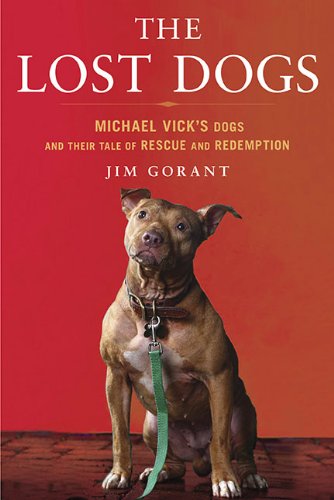
The Lost Dogs

This is the story of the 48 dogs rescued as the result of a raid on a dog-fighting breeding establishment in Virginia. The case was something of a cause célèbre due to the fact that one of the owners of the kennels was a highly-successful American Football star and, as part of his plea-bargaining arrangements a considerable amount of money was made available as "restitution" to be used for the rehabilitation of the dogs.

Without this financial resource it's unlikely that the more timid or dog-aggressive animals could have been saved—and in fact from a British viewpoint it's rather shocking that all of them might have been put down with no attempt at evaluation and before the case had even come to trial simply because the police had no funding to keep dogs long-term.

The cash windfall made possible what was effectively a trial project into the rehabilitation of dogs seized from fighting cases. The results are fascinating and in some ways it's a pity this write-up is so firmly aimed at a popular animal-loving audience. I hope some more in-depth studies will appear later.

Within its limitations this is a book with lessons for anyone interested in the "status dog" phenomenon and in rehabilitation of abused dogs. (A very clear lesson is that it can only be solved by dealing with the problem of young male human status aggression, not by regulating particular breeds of dogs). 

One  very surprising finding was that fearfulness was enormously more of a problem for the majority of the dogs on their journey towards normal life than aggression towards other dogs.

Tuesday, September 14, 2010

Volunteers' Meeting this Thursday

Next informal volunteers' meeting is this Thursday, 7.30-9.30pm at our charity shop, 61 Burleigh St. All welcome.

There's free parking after 7pm at the Adam and Eve St. car park just behind Burleigh St.

Monday, September 13, 2010

So... why isn't the whole of England and Wales a no-kill community?

The ten "No-Kill Equation" recommendations     MAWS
1. Feral Cat TNR Program 
2. High Volume/Low-Cost Spay/Neuter                3. Welfare Neutering
3. Rescue Groups 
4. Foster Care 
5. Comprehensive Adoption Program                    2. Rehoming
6. Pet Retention                                                 4.  Assistance with Veterinary Treatment 
7. Medical and Behavioral Rehabilitation              1. Animals accepted into branch care
8. Public Relations/Community Involvement 
9. Volunteers

Compare these with the Minimum Animal Welfare Standards and you'll recognise that their core principles are identical. (MAWS doesn't specifically mention neutering feral cats, but this is RSPCA policy). Items 3, 4, and 9 are already inherent in the voluntary nature of RSPCA branches.

To an extent the answer is that England and Wales do manage to save a higher proportion of stray and unwanted animals than some other similar countries. In the 1990s we were enthusiastic that this proportion could be increased quite fast, but over the two decades since then we have been barely holding on to the gains made then.

Why?
Item 8 is perhaps the key. 

We've not succeeded in attracting the amount of sustained community support needed to maintain ongoing services at the necessary high level of activity. So long as people and companion animals live together there will always be situations where animals need to be rehomed—just as there will never be a situation where we all have such perfect health that the NHS isn't needed. It's probably inevitable that this work is less immediately attractive than crusades aimed at abuses that can apparently be ended once and for all and we have to solve the problem of "selling ourselves" to gain more support from a wider active community. 

I wonder whether there's not also a degree of difficulty caused by the fact that this is a campaign that doesn't really have any "enemy" most of the time. Some of the animals we rehome have been intentionally abused, but the majority have come to grief because of accidents, poverty or inadequacy, not deliberate cruelty.

The Minimum Animal Welfare Standards

Because of their relative autonomy from the parent society, RSPCA branches have always done their own thing to a certain extent, which is one of the reasons why services available vary so much between different parts of the country. In the very early days, all that was asked was that they should raise the funds to pay the salary of their local inspector. Gradually other facilities evolved, often because of individuals with a special interest in particular aspects of animal welfare (for example oiled seabirds). 

Periodically there are attempts to agree a certain amount of standardisation, usually via consultations at the Branch Officers' Conference or the Branch Animal Welfare Conference. I was one of the Cambridge branch delegates at the Branch Officers' Conference where the MAWS statement was  originally agreed (in the 1990s) and can vouch for it being a somewhat non-ideal meeting of tired individuals who had traveled long distances on Saturday morning after a full working week in their day jobs.

MAWS falls under four headings:
1. Animals accepted into branch care
  • Branches should be able to provide advice or assistance to animals of all species, even if only by referral to specialist organisations.
  • Animals taken in by the inspectorate, and in need of accommodation, should be seen as having first call on the branch's animal welfare resources. The branch with this responsibility for the animal is the one in whose area the animal is found.
  • Branches should aim to accept all companion animals offered to them for adoption, although this may not be achievable in the short term.
2. Rehoming
  • All dogs and cats should be micro chipped before rehoming in line with current Society policy.
  • Where an animal is offered for adoption and a pre-home visit is required in accordance with the rules, the potential adopter should initially be contacted within 48 hours and the visit itself should be conducted within a week. 
  • All animals for rehoming should be neutered, in line with current Society policy, (except where there are over-riding veterinary reasons for not doing so). In the case of animals that are too young to be neutered at the time of adoption, a neutering voucher should be issued and the branch should attempt to ensure that it is used.
3. Welfare Neutering 
  • All branches should establish a welfare neutering policy and budget. 
  • Support with welfare neutering of their animals should be offered at least to people on the following benefits: income support, working tax credit, housing benefit. 
  • Owners who fit the eligibility criteria should be offered a minimum contribution toward the cost of neutering their animals (suggested to be at least £10 or 10% of their bill)
4.  Assistance with Veterinary Treatment 
  • All branches should establish an appropriate veterinary assistance policy and budget. 
  • As with welfare neutering, help should be offered at least to people on income support, family credit or housing benefit. 
  • All people asking the RSPCA for assistance and meeting the eligibility criteria should be offered at least a contribution sufficient to ensure that their animal is seen by a veterinary surgeon (i.e. at least the cost of the consultation fee).

Saturday, September 11, 2010

Branch animal welfare statistics for August

During August our clinic treated 257 dogs, 115 cats, six rabbits and two "small furries" and neutered eleven dogs and three cats.

We took in one dog and eleven cats who had been signed over to our local inspector for welfare reasons, and nine unowned sick or injured cats referred to us via the National Control Centre. We also took in two dogs and a cat whose owners were unable to keep them and had a previously rehomed dog returned to us due to his adopters being posted abroad.

We rehomed seven cats and one dog, however August is usually a slow month for homing because people are away on holiday and September's figures are already looking better.

Charity Shops Pt 2

So, now you have a shop, all kitted out with rails, hangers and shelves. You hope that people will start bringing in donations, and you will probably have done at least one collection so that you can open with a decent-looking amount of stock.

Customers are weirdly blind to new happenings on a familiar street. Even a year on people are still wandering into our 61 Burleigh Street shop in Cambridge and saying: "Ooh! I didn't know there was an RSPCA charity shop in Cambridge." There are people living on Mill Road who have never noticed our second hand bookshop at number 188 (after it's been there for 6 years!).

One of the reasons why I started this blog was to try to attract more publicity for our shops and other fundraising efforts. 

People don't look up—so the very nice signs above shop windows seem to be almost useless as a way of telling them we are here. So far the most effective signage seems to be A-boards (facing shoppers' direction of travel at roughly eye-level) and decals stuck at eye-level on the glass doors.

People no longer expect to push doors—and will conclude that a shop is either closed or being used as a display space to avoid the street looking full of boarded-up premises unless you keep its door open or install an automatic opening sensor system.

So, you achieve your initial target of selling roughly 100 items every day, around an average price of £3.50. Your  takings are £350 and you pat yourself on the back, BUT...

Around £200 of the £350 will be needed to pay rent, rates, staff wages, heat etc. Allowing for Sundays and bank holidays, you may hope to see a fairly steady £3,600 profit in a month. 

When you consider that our kennelling bill is at least £2,000 each month, veterinary services to our clinic average £6,000 and charges at private vets £2,000 you can see why we need several shops and must run them to make the maximum profit possible.

Thursday, September 9, 2010

Charity Shops!

As there really seems to be light at the end of the tunnel for the proposed new shop in Newmarket I thought I would write something about the process of operating a charity shop from the point of view of a branch committee—there is a lot of frantic activity in the background and it is not simply a matter of finding an empty shop, paying some rent and moving in.

First find your shop:

Potential income from sales has to be balanced against costs, particularly rent. A smallish shop in a quiet area may cost about £11,000 in rent. Something similar in a busy shopping area may be more than three times as expensive, but may pay for itself by attracting a far greater number of shoppers. Very few people will make a special journey to a charity shop if there is nothing else in the location that they need to visit.

If you decide to go for a shop in a busy location you will need to achieve very high volume of sales to make it pay. It may be necessary to organise "trawling" (which is where you distribute collection bags one week and pick them up the next—filled with saleable donated items, you hope). To make a profit will need to sell at least 100 items daily; which will involve a hefty amount of physical work sorting donated goods, cleaning, pricing and putting out on the shop floor. Unless you can field at least two reasonably able-bodied volunteers six days a week it will be impossible to keep up without employing some paid staff. Even with the low sales volume at the old Newmarket shop it nearly finished off the two volunteers who wound up doing the bulk of donation processing in the evening and at weekends.

Once you settle on premises that seem suitable there will be protracted negotiations with the landlord's agent and solicitor. Their job is to get the best possible deal for their client—which means that, if they can persuade you to agree to take on expensive repairs or to ignore that suspicious stain on the ceiling, they will. You have to grit your teeth and rely on the experience and advice of your own solicitor and surveyor, and not let yourself be persuaded that being careful is unnecessary delay. Unlike a residential property commercial landlords have no obligation to pay for repairs unless this is specifically agreed in the terms of the lease.

The amounts of money involved are pretty scary: shop rent is typically paid three months in advance, so for a £20,000 annual rent £5,000 must be found up front. Many landlords will require another three months' rent as a deposit. Unless the shop is already equipped with suitable rails and shelving, there will be at least another £10,000 to pay for fitting out, so £20,000 may have been spent before the shop even opens.

Once you have an agreed lease, two committee members must sign it as "holding trustees". This means they agree to take responsibility for ensuring that the rent is paid and the terms of the lease adhered to. A shop lease is not like an ordinary tenancy of a flat or house—if things don't work out the charity can't simply give a month's notice and leave. I've been one of the holding trustees for three of our branch shops so far, and am not yet bankrupt, but none of this is something to do lightly.

The major attraction of shops is their potential for generating regular income that can be increased by simply working harder. Virtually all other sources of income are at the mercy of the whims of public opinion.

Wednesday, September 8, 2010

Pioneers at Bath Cats and Dogs Home

In England and Wales, the term "non-destruction" is normally the preferred term for what would be referred to as "no-kill" in the US and Australia. I hope BCDH won't object to me reproducing the following timeline from their website:
1937
• Three local animal charities unite to become RSPCA Bath Branch.
• Bath resident Mrs Bayntun gifts five acres of land and £4,000 (equivalent to nearly £200,000 now) enabling the new charity to set up a dog shelter.
1948
• John and Mary Hobhouse join the Bath Branch committee.
1953
• John Hobhouse becomes chairman of the Bath Branch (until 2000).
• After considerable arguments, the City Council concede that stray dogs can go to the kennels for re-homing rather than being destroyed.
• The Bath Branch is the first RSPCA branch to implement a strict non-destruction policy.
1955
• John Hobhouse is elected to the RSPCA National Council.
1960
• John’s five-year battle to form and chair a ‘Homeless Animals Committee’ is finally realised.
1962
• The Homeless Animals Committee persuade the RSPCA Council to spend £100,000 to build or rebuild an animal centre in each major city. Within a year these new kennels were saving the lives of 10,000 dogs that would otherwise have been destroyed.
1969 – 1975
• John Hobhouse elected as chairman of the RSPCA National Council. 
1986
• The Friends of Claverton is formed. A separate registered charity, the Friends raise funds through membership and legacies.http://www.friendsofclaverton.org/
1995
• After three generous legacy donations totaling £500,000 the Home plan a redevelopment of the dilapidated 50 year old buildings with modern facilities. 
2001
John is elected Bath and District President
2002
• The first two stages of redevelopment are completed, including four kennel blocks and runs, a cattery, vet suite, administration offices, visitor facilities and a new sewerage system. The cost of £2.2 million had been raised solely by donation and fundraising.
2006
• The third stage of development is completed, with two circular kennels. The cost was paid for by the fundraising efforts of the Friends of Claverton. 
2009
• John Hobhouse dies peacefully in Frome Hospital, Somerset, on Thursday 24 December, aged 99.
There's some more information about how BCDH works with the local authority dog wardens in this article. 

Tuesday, September 7, 2010

Further thoughts on licences and dog wardens

I suppose attitudes to this are very dependent on whether your view of the role of dog wardens is that it's primarily for the benefit or detriment of dogs.

The majority of calls about uninjured stray dogs that we get at evenings and weekends are from people who've found a dog and want it to be collected and taken somewhere safe to be cared for until the owner is found. Their main concern is usually that the dog may get run over if left. Legally these calls should be the responsibility of the local authority, but very few of these employ dog wardens outside normal working hours.


We get some calls demanding that we come and collect a dog who has bitten someone or savaged another dog and these are really the responsibility of the dog's owner or the police. It's comparatively rare for us to be called about loose dogs because someone feels they are a threat.


If your view of dog wardens is that they are a positive element for animal welfare you will want more cover. If you see them as roaming the streets "seizing" dogs who would be safer where they were you will want less.


It may be helpful to look at some of the material on the website of the National Dog Wardens Association and, in particular, their comments on an earlier government consultation on introduction of  a compulsory microchipping and insurance system which for practical purposes would be similar to a dog licence system (part of the DEFRA consultation on Dangerous Dogs).
[Q27: Do you think that requiring all dogs to be covered by third-party insurance could have a significant financial impact upon individual dog owners? Why?]
It is estimated that 25% of car drivers in the UK have no insurance, so you would have to assume that 25% of dog owners would not adhere to any licensing requirements.  If this were to be so, any dogs seized and not having a license would only be released back to the owner after the dog had been licensed (the statutory government charge for stray dogs would be waived to enable registration to be carried out for a year) A lot of dog owners leave their seized dogs at the holding kennels rather than claim them because they begrudge paying the fees, this shows that possibly it is better for that particular dog to not be with such a person. Where an owner’s dog is involved in an incident and he is found to be uninsured, this would constitute a serious offence (as with cars). We would support reductions for pensioners and multi-dog households,
[Q28: Do you think that requiring all dogs to be covered by third-party insurance will have a financial impact upon welfare organisations/dog homes? Why?]
Why would it?  If a stray dog is rehomed by a Local Authority to an animal welfare charity, when that charity rehome the dog, they should have a legal requirement to make the new owner fill in the registration form for the area they live in.  Example being, a person is adopting a Labrador and they live in Manchester, the new owners come to collect the dog and they have with them the Dog License complete with insurance. Dogs’ homes/charities should have insurance for the whole premises rather than for individual dogs.

[Q29: Do you think that all dogs should have to be microchipped? Why?]
Yes but microchipping of all dogs is not the be all and end all it is made out to be!  Dog Wardens average about 40% of dogs with microchips handled by them having out of date, incorrect or no details at all on the microchips?  Who would enforce any discrepancies regarding microchips……Local Authority Dog Wardens, not Petlog, not the animal welfare organisations or even the police?  Do Local Authorities have the resources to carry out this work in the current climate with Local Authorities cutting the size of Dog Warden Services or downgrading the important work they do? Compulsory microchipping would work well in conjunction with the insurance requirement (see above Q.25), otherwise it is difficult to enforce on it’s own as most people who move or give away/sell their dogs forget to change the details

[Q30: Do you think that all puppies born after a specified date should be microchipped before the age of one year? Why?]
As Q29. I think microchipping/insuring puppies is important and, with this proof of ownership, would help to combat the puppy farmers and irresponsible back-street breeders. Puppies should be insured and chipped before they are sold – there could be a specific clause that allows transfer of ownership with the insurance policy for puppies that are intended for gift/sale; this would apply to private as well as commercial breeders.
[Q31: How do you think such a requirement could be introduced and enforced?] 
Who would enforce it, hard pressed Dog Wardens who as this consultation document points out varies from highly motivated, well trained and knowledgeable to poorly trained ones.  Many Local Authorities fail to appreciate the important role that Dog Wardens play in community safety and those who have downgraded their services to stray dogs being dealt with by Pest Control Officers/Community Safety Officers for example are not going to have individuals who are spending 100% of their work day dealing with dog issues. Any enforcement needs to be carried out by motivated, well trained and knowledgeable Dog Wardens who are fully supported by their Local Authorities and properly funded. Again, works best in conjunction with insurance where insurance companies would run the database. It would tend to be enforced only when a problem dog comes to light that isn’t insured which is why the penalty for non-insurance should be an adequate deterrent. Yes, this would initially require extra enforcement by Police/Local authorities but could ultimately reduce enforcement.
and:

[Q39: Do you think the government needs to do more to raise public awareness of the existing law and what to do if you are aware of a possible breach?] 
I think the public are aware of the existing law but they are also hopelessly misinformed with regards to dog behaviour and responsible ownership. The government need to lend more support to Local Authorities who should be at the forefront of public education. Instead, more local authorities are cutting their dog warden budget or outsourcing their stray dog contracts.
Relocating control of dogs to the "Pests" department is not likely to improve their care!

I think there's a more general problem about the public view of animals being "seized" (by RSPCA, Police, dog wardens etc.). Most of the time this is reactive, as a result of a call from a member of the public asking someone to collect an animal, because it's thought to be ill, injured or otherwise at risk in some way. Sometimes an animal may not have been seized in any meaningful sense of the word: for example where the animal's carer has asked to sign it over to the RSPCA. We've had situations where a third party referred to us "seizing" a dog when we'd in reality been asked by an owner to take the dog for rehoming as an alternative to euthanasia.

Sunday, September 5, 2010

What IS "responsible breeding", anyhow?

If you've been following the dog licence debate on Twitter, you may have noticed some acrimonious exchanges between @rspcalondonse and a few dog bloggers. (I think I rather resent the comments questioning whether someone who is "only" a volunteer spokesman for a branch should be allowed to express an opinion).

Anyone who thinks companion animals should simply be eliminated by neutering them all can stop reading now. If you think we should be aiming to reduce over-production so that no animals have to be killed because they can't be placed in homes, carry on.

First of all, we need to get over our hang-ups from the days when massive numbers of puppies were put down every year as a result of unwanted litters. In the UK this simply is not happening any longer; unless there is something seriously wrong with a particular puppy it will be relatively easy to find a suitable home.

Unfortunately the downside of this is that puppies have a commercial value and it is possible for unscrupulous people to make money by keeping bitches in dreadful conditions. The primary reason why this needs to be stamped out is the cruelty suffered by the mother dogs who may be producing litter after litter in situations that are literally similar to battery farming. Keeping dogs like this would be wrong even if it had no effect at all on the number of animals ending up in rescue. Dogs are our companions—would you want your friend's mother to spend her life in a dark shed and worn out after half her normal lifespan?

In fact, of  course, this kind of breeding produces puppies who are more likely to end up in rescue (because they may be ill, have behaviour problems, or simply have been purchased by someone who would not have been sold a puppy by someone who cared about dogs). The discarded bitches will either be killed, passed on to rescue organisations, or sometimes sold to unwary purchasers who think they are getting a cheap pedigree.

Pretty well everyone involved with dogs agrees that this kind of breeder is not "responsible" (although they may still get licences from the local authority if the LA is more interested in supporting local businesses than in animal welfare).

We then move on to all the others who breed dogs and it's here that the disagreement starts, because there's not much agreement about what a "responsible" breeder would be aiming to do.

On the one hand there are the fairly large scale pedigree breeders, who are primarily aiming for success in the show ring and produce puppies for sale to the pet market as a by-product. To be successful they will be keeping their breeding dogs in good, hygienic conditions, well-fed and the dogs who compete in the show ring will necessarily receive training, which is important for their mental wellbeing. They are likely to be reasonably knowledgeable about avoiding inherited problems by suitable genetic testing (although they may be fairly pig-headed about accepting the deleterious effects of inbreeding and a small gene pool). They may also be blinkered about defects which are inherent in the standard for their particular breed. Their dogs will be valuable and are likely to be sold with clauses requiring "pet-quality" puppies to be neutered.

For me, the faintly derogatory "pet-quality" phrase is the key; these breeders may genuinely be trying to do the best for their dogs, but suitable family companions are not their primary goal. Some pedigree dogs are selected for traits which are positively deleterious to them; for example who on EARTH in their right mind would think this is normal?

Pedigree breeders aren't necessarily only interested in how the dog looks: there are Papillons and Shelties who can compete successfully against Border Collies in Obedience classes.

Finally there are "hobby breeders" which may include owners hoping to make a quick profit who neither know nor care about health checks necessary for their breed; those who simply want to be able to keep a puppy from a well-loved pet and highly knowledgeable people whose dogs are primarily companions, but also want to compete. Some breeders do so as a sideline to running boarding kennels.

Clearly some breeders are more of a problem for rescues than others. I doubt whether there are many potential Staffordshire BT adopters who buy Chihuahuas instead, but SBT breeders certainly are competing for homes with rescue dogs. Anyone breeding dogs which will almost routinely need surgery (Sharpei, British Bulldog etc.) really should be questioning what they are doing.

Finally—what kind of dogs should a responsible breeder be aiming for?

Take a look at the fascinating Family Dog Project website (thanks to Cambridge dogs for the link).

Dogs evolved as animals who specialise in understanding human behaviour!

By reducing them to quasi factory farm "products" we risk throwing away thousands of years of evolutionary development which has produced creatures who are our companions and willing assistants, not only in traditional work, but dealing with completely new challenges, such as finding the nests of bumble bees and humanely relocating hedgehogs.