Saturday, August 28, 2010

Friday, August 27, 2010

Tuesday off to new foster home this evening

Katie's back from her holiday, so she came round to collect Tuesday this evening. Tuesday was a little star, walking into her carrier like a seasoned traveller. The same could not be said of Merlin who howled: "OTHER KITTY BEING FED!" in the background the whole time, while my own Coco who has a bit of a nervous tum at the best of times, decided to mark the occasion by using the litter tray. Madly squirting lavender odour eliminator before answering the door didn't entirely help and poor Katie and her sister must almost have been knocked off their feet by the composite wave of "fragrances".

All I need is a good supply of filmy scarves to complete the "mad cat lady" effect.

There are good reasons why RSPCA HQ encourage branch volunteers to avoid taking on too many animals at once.

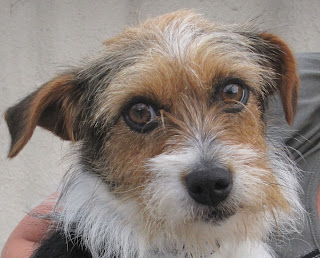
Beautiful photo of Tuesday in today's Cambridge Evening News which may help to trace her owners.

Tuesday and Merlin

The veterinary hospital that provides our veterinary services needed to free up the cage being occupied by Tuesday (another cat with pelvic fractures), so I now have two cat pens in what I laughably call my spare bedroom. 

I think it's still possible that Tuesday's original owner may turn up as she was wearing a collar when found, and she's very friendly. The vets think her fractures will heal without surgery provided she's kept on strict cage rest for at least 6 weeks (re-do the x-ray after 4 weeks to check on progress).

Merlin is all black and has a broken foreleg which has been fitted with an external fixator to keep the broken bones aligned until the ends knit together. He's quite timid and hadn't been neutered when he was brought in (the vets did the op. at the same time as they set his leg), so had probably been living rough for some time.

I was a bit concerned that having the two pens close together would agitate both of them and risk them damaging themselves, but so far all is peaceful and the shocking sight of Tuesday getting food and fuss before him seems to be bringing Merlin out of his shell.

Fortunately some of our other holidaying fosterers are due back later this week, so it will be a bit easier to cope if we get any more incoming cats this weekend. However we could still use more foster homes: if you might be interested in this, or if you would like to adopt a cat or dog, please email rehoming@rspca-cambridge.org.uk

Mob justice?

Why is it that the very unpleasant, but non-fatal "cat binning" incident has drawn such an enormous amount of publicity (1,230 news items reported in Google) in comparison with the much worse cruelty to more than 100 animals in Somerset (44 news items),  the awful drowning of a couple's pet terrier by unknown thieves in Lancashire (2 items) and the almost unbelievable callousness of the person who threw an English Bull terrier bitch into a river while she was actually in the process of giving birth (3 items)?

If even a small percentage of those expressing outrage about the wheelie bin incident took some practical action for the welfare of animals it would do a lot more good overall.

Kudos to the anonymous member of the public and the police dog handler who saved the Bull terrier's life at some risk to themselves.

Thursday, August 26, 2010

More and more cats!

More and more requests coming in for us to take unwanted cats, as well as incoming injured strays. If you might be interested in fostering for the branch, please email rehoming@rspca-cambridge.org.uk

Most of the animals we place in foster accommodation are cats recuperating from injuries, kittens or puppies who need to be in a domestic environment for correct social development, or dogs who we think would benefit from training and assessment under home conditions.

Most of the adult cats need cage rest in order to facilitate healing of various injuries, so this might be a suitable option for someone who would like to have cats but cannot give them the run of the house.
This pic. gives some idea of the kind of pen we use for cage-resting injured cats
If a cat is having cage rest on veterinary instructions it is very important that the fosterer can resist the temptation to let  him/her out, because running or jumping may prevent a broken bone from healing, or even mean that it has to be operated on a second time to re-set it.

Monday, August 23, 2010

Snap!

RSPCA Manchester and Salford says almost exactly the same thing as my previous blog entry but from a different perspective:
"Each time I have to say 'no' to someone who has exhausted all options the guilt weighs heavy on my mind. The situation could be an unwanted pet, a stray cat, a stray cat having given birth outdoors, someone who can't pay a vet bill, someone who wants a lift to the vets, someone who wants me to collect an animal - the list is just exhaustive. Few understand that the resources of most animal charities are extremely limited. My role at the branch is complex but I'm basically the manager and I have a member of staff who oversees the care of the animals and a pt staff member who does the day-to-day care. That's it.
What we can achieve rarely feels even remotely adequate enough and it's only at times like learning how an adopted animal is doing in their new home that you feel there is some sense of purpose to your role.
No one goes into animal rescue & rehoming to turn animals in need away, to say 'no' to desperate pleas of help or to have to put animals to sleep is not what any of us want to be doing. But what most people do expect is for animal charities like the RSPCA (whether locally or nationally) to have the answers to everything and help every single animal in need."
I think "exhaustive" is a freudian slip on her part. 

Sunday, August 22, 2010

Why don't people come to meetings?

RSPCA Clwyd and Colwyn wonders why it's so difficult to get branch members to attend their AGM or other meetings. It seems to me that it's the same underlying set of problems that make RSPCA week less successful than it might be, and which I blogged about last year.
  1. Individuals may genuinely believe the RSPCA doesn't have a pressing need for their support because we have enormous numbers of other members.
  2. Most branch committees are run by very few, over-worked individuals. This means the people organising anything are generally also trying to do other things. Volunteers and new members may get the impression that things are disorganised and badly-run, and they may feel unappreciated if we don't answer calls immediately or if they want to do specific things (like walking dogs) and we want them to do different (and more boring) things (like fundraising or taking part in business meetings).
  3. There's a knock-on effect from (2) when people who think we're inefficient actually do volunteer to join in and are very enthusiastic but want to start changing things immediately. Because we're already operating very close to the edge of not coping, what we need is people who are willing to help with existing jobs, not make more work, even if their intentions are good.
  4. There seems to be a fatal tendency for people who are really keen on helping animals to set up new groups rather than supporting existing ones, particularly if the local RSPCA isn't doing something that they think it ought to be.
  5. And, partly as a knock-on effect from (4), there seems to be a general disenchantment with the kind of local democracy that the RSPCA embodies, which depends on groups of people working together with set rules and majority decisions. In many ways there's a frustrating sense that internally we've won all the battles that are being waged by activists in Australia and the US but we just can't recruit the ongoing practical support we need to keep up the momentum and eventually we're simply going to run ourselves into the ground. It's interesting to contrast the 2010 no-kill conference with the ICAWC conference organised by the Dogs Trust, or with the RSPCA's  Animal Welfare Conferences for members. The viewpoint of the no-kill conference is very much of activists looking in whereas we're inside running the services and trying to keep afloat. Inevitably we spend an awful lot of time worrying about finances, simply because we're on a treadmill of recurring bills (kenneling, vets, rates, rent...) and the need to keep generating income to pay them.

    Saturday, August 21, 2010

    Part of the "No-Kill Equation"

    RSPCA Bury and Oldham have a mobile vet clinic that provides low-cost vaccinations, health checks, worming, flea treatment, and micro-chipping within the community, but there's been a furious debate on Facebook about whether people who can't afford the full cost of treatment should be allowed pets. 

    Brent at KC Dog Blog in the US has an extended rebuttal of this kind of attitude:
    As an animal welfare community, we have somehow gotten in our minds that we need to try to punish people for not altering their pets -- and consider them 'not worthy' of pet ownership if they don't. So instead of taking the time to educate, and to be part of the community and being people who want to help, we become the people trying to take their pets away.
    And if the animal welfare continues to create a divide between itself and various communities, we will fail. As Donna notes in the post: "To decrease euthanasia rates and curb irresponsible ownership, we need proactive, cost effective solutions to embrace the human-animal bond, rather than tear it down."

    Sometimes animals do have to be taken away from owners who can't or won't care for them properly even with support. Most low-income pet owners are not like that; they do love their pets and want to do the right thing. However if you really are short of cash the temptation is always to put your head in the sand and hope your cat won't get pregnant before you can save up the money to get her spayed, or that your puppy won't catch anything nasty if she's not vaccinated. If we simply decree that these people shouldn't have pets we're removing a huge number of homes where unwanted pets could go and creating more homeless pets from those they already own.


    Animals are always going to be relatively cheap to acquire, because two cats, dogs or rabbits can produce more of themselves at little or no cost unless something goes terribly wrong medically (at which point it becomes hideously expensive, but it is TOO LATE to lecture the owners about their shortcomings). Attempt to ban ordinary, good owners from keeping animals and they will simply hope not to get caught.


    Veterinary support (with some strings and a requirement that the owner does contribute something towards the cost) are an essential element of an effective strategy to end killing of unwanted animals in shelters. 

    Friday, August 20, 2010

    Release locations needed for outdoor cats

    Do you have a large garden or other land or stables where you would be prepared to have one or more outdoor cats? We periodically take in strays who have been living rough and are too shy of human beings to be easily placed in ordinary pet homes.

    All cats would be blood-tested, neutered and vaccinated. You would need to have a building or shed where they could be confined for an initial settling-in period to avoid the risk that they would try to "home" back to their original location.

    If you might be able to help in this way, please email rehoming@rspca-cambridge.org.uk

    Thursday, August 19, 2010

    How not to do a home-visit!

    Ouch! (I should say at once that the facebook page discussed in the linked article does NOT belong to any RSPCA facility in Britain).

    We do ask potential adopters for a letter from their landlord confirming that it's OK for them to have pets, but I hope we would go about it a little more tactfully than that and this is where training is key.

    The Librarian has some very relevant wise words about why the staff and volunteers of any organisation should beware the temptation to bad-mouth their customers on social media. Animal rescue groups are no exception to this rule; animal adopters are our support base and we need to remember this even when we most feel: "the more I see of human beings, the more I like dogs."

    Everyone who adopts an animal from our branch normally has a pre-adoption visit to check that their facilities are suitable for the pet they want and to try to ensure any snags are dealt with before they cause problems. (For example our home-visitors will give advice on whether the adopters' garden fence is able to contain the dog they've reserved.)

    It's important that home-visitors don't get the idea that their job is to catch out people who are going to be cruel to animals; it can cause enormous difficulties if they take it upon themselves to do subsequent un-announced visits or otherwise give adopters the impression that they are being treated as suspects. Follow-up post-adoption visits should always be by pre-arrangement with the adopter — realistically what are they going to cover up as a result of having a few days notice?

    The vast majority of people who come forward to adopt do it because they love animals and want to help and it does animal welfare no favours if we insult or patronise them because that means they'll be less likely to help us with other things, like fundraising, in the future. Some of them do need to be encouraged to accept that standards of pet care have moved on since they were children (we wouldn't home a single rabbit to live alone in a hutch, for example), and some need a gentle steer towards animals that are suitable for their circumstances (for example a large dog in a flat with no lift is going to be a big problem when he gets elderly and finds stairs difficult).

    Home visitors are essentially a point of contact between the adopter and the branch, and post-homing visits should be an opportunity to solve any problems and ensure the placement is a success, not a threat that the animal will be taken away.

    In reality our biggest problem is not abusive adopters, but lonely, needy ones who would ideally like to have their home visitor popping back every weekend to check the pet is OK and help with flea treatments, nail trimming etc.

    We always need more volunteers to do home-visits, as it's important that the visit is done as soon as possible after an adopter has expressed interest. If you might be interested in training for this, please email rehoming@rspca-cambridge.org.uk

    Wednesday, August 18, 2010

    Missing Staffordshire Bull Terrier

    Chaos
    Chaos went missing from his home in Oxfordshire in March and his owners have been searching for him ever since. It's possible he might have been stolen and then dumped, so he could be virtually anywhere in the country. If you find a dog looking like him, please call 07769 185 413 / 07968 351 154 

    We are rubbish at identifying pedigree cats!

    Suzie — now
    Suzie - just after he came in
    "Suzie" was brought in to us because she was abandoned. She is in fact a neutered male (in our defence the initial mis-identification of his sex wasn't us; we are not completely incompetent).

    We thought he was possibly a British Shorthair, but in fact he's a Selkirk Rex. The fact that he would originally have been purchased for quite a lot of money makes it even more peculiar that he would have been simply abandoned.


    Still, lovely to see he's found a wonderful home, and at least now we know why his whiskers look so beaten up; they have a natural wave.

    Tuesday, August 17, 2010

    Pip, Ben, Toby and Duffy all looking for homes

    Duffy
    Toby
    Ben
    Pip


    Although Pip and Ben look rather similar we've got no reason to think they are related. Toby is only 8 months old and was adopted from us by a family who were unexpectedly posted abroad and had to return him. Duffy is a GSD x Rottie cross and only a year old, but was passed between a number of people before ending up with us, so needs a home where she can be given TLC and consistent handling and training.

    There's more detail about each of them on our rehoming gallery If you might be interested in adopting them, please email rehoming@rspca-cambridge.org.uk

    The stockroom at our charity shop

    Thank-you, everyone who donated last week. Donations included this cute, but rather large, beanie baby(!) and an extremely realistic life-sized Old-English Sheepdog soft toy.

    Don't forget our volunteers' evening is this Thursday evening at the 61 Burleigh street shop from 7.30-9.30.

    Monday, August 16, 2010

    Donated to our second hand bookshop

    Catalogue of books printed in the fifteenth century now in the British Museum
    The photo doesn't give much idea of how big the actual thing is—there are multiple volumes and each is huge. They're actually brownish rather than green, but I took the picture under fluorescent light and the colour of the photo is a bit odd.

    Many thanks to the donor (who must have had quite a job getting it to the shop!).

    Sunday, August 15, 2010

    Cats everywhere!

    This year's been particularly bad for unwanted cats, partly because our funds are so low that we have to think very hard before taking any extra animals into our kennels and partly because it looks as though more owners are procrastinating about getting female kittens neutered until it's too late.

    We need to recruit more foster carers so that we can avoid putting kittens into a cattery environment where they miss out on the important social learning they would get in a home environment. 

    If you might be interested in fostering for us, please email rehoming@rspca-cambridge.org.uk 

    We will cover expenses such as food, litter etc.

    Slideshare presentation on volunteer recruitment and retention

    From Adopt a Pet in the StatesVolunteering
    Not quite what you'll find in most RSPCA branches because the majority of these are directly run by their management committee members, who are all volunteers themselves. However there are lots of tips we could use.

    Saturday, August 14, 2010

    Calling these weasel words...

    ... would be an insult to weasels everywhere:
    The Home Retail Group, of which Argos and Homebase are members, said it was committed to being a responsible retailer. A statement said: "The RSCPA has advised that it has no current recommendation for the size of a hutch for a single rabbit. In our autumn/winter catalogue we do make it clear that hutches should be used in conjunction with a run, we will be amending the website to that effect. We also offer a discount on a run if purchased in conjunction with selected rabbit hutches."
    One reason why there is no official recommendation for the size of hutch for a single rabbit is that the RSPCA advises that rabbits should not be kept on their own!

    Friday, August 13, 2010

    How volunteers help stretch funding

    If you use Battersea's income and rehoming figures as a base for making comparisions (One Battersea Unit)  something rather interesting emerges.

    The RSPCA's overall animal rehoming is roughly 10 Battersea Units

    On top of this we provide roughly half as many animal treatments as the PDSA

    Total RSPCA income (including the branches) is roughly 10 Battersea Units and a bit more than half a PDSA unit.
    So, on that basis, the rescue and law enforcement services of the Animal Welfare Officers and the education and campaigning activities are virtually thrown in free.

    That rather knocks out the complaints that the RSPCA is spending money on prosecutions and campaigning instead of on practical welfare work.

    If the branch volunteer network finally gave way under its workload and threw in the towel, I don't think funds could be stretched nearly as far as they are at present.

    Thursday, August 12, 2010

    Wordle Word Cloud

    Wordle: RSPCA + Volunteers = ANIMALS getting veterinary Treatment and Rehoming
    VOLUNTEERS + RSPCA = ANIMALS getting veterinary TREATMENT and REHOMING