Saturday, July 24, 2010

Waterboarding Timmy Tiptoes

Rather horrifying to find how many people seem to see nothing wrong with cruelty to squirrels. As usual, Pete Wedderburn the Telegraph columnist, stands up for animals in a well-argued piece.
"Under the law, it’s perfectly legal to kill squirrels: they’re not a protected species. But the squirrels must be killed humanely. The law is absolutely correct in its view that drowning is not humane."


The recent prosecution for drowning a squirrel in fact has little to do with changes to the legal situation brought in by the Animal Welfare Act.

The old Protection of Animals Act (1911) stated:
If any person shall cruelly beat, kick, ill-treat, over-ride, over-drive, over-load, torture, infuriate, or terrify any animal, or shall cause or procure, or, being the owner, permit any animal to be so used, or shall, by wantonly or unreasonably doing or omitting to do any act, or causing or procuring the commission or omission of any act, cause any unnecessary suffering, or, being the owner, permit any unnecessary suffering to be so caused to any animal ... such person shall be guilty of an offence of cruelty within the meaning of this Act.
The concept of unnecessary suffering would have been sufficient to establish the illegality of drowning squirrels instead of killing them humanely (and interestingly there have been no complaints about an almost simultaneous prosecution of two people for drowning a hamster).

It does point up the general confusion over the distinction between protecting animals from suffering and saving animal lives.

At one extreme, I suppose it would be possible to prevent any animals suffering by simply exterminating them all (which I hope no-one would see as something to be welcomed!).

At the other extreme, there are some belief systems which insist on the preservation of life even if it means the continuation of severe suffering.

Some campaigners reject the concept of the RSPCA's Freedom Food scheme, which aims to improve the welfare of farmed animals, because they believe humans should never kill animals for food and that farm animals should not be bred, but allowed either to go feral or become extinct.

Some people think we should have an entirely "open door" policy for RSPCA shelters—if necessary humanely killing animals that have not found homes after a certain period in order to make room for new admissions.

I guess the main practical outcome of all this is firstly that we evidently need to be very cautious about loaning out humane cage traps to anyone we don't know, and secondly that some of the people who would have drowned squirrels may try to put us on the spot by bringing them to us to put down. One of the comments below the Daily Mail article gloatingly promises to trap squirrels and bring them in to RSPCA charity shops; another treat in store for our put-upon staff.

Arguably, by analogy with Freedom Food, we ought to put down squirrels, if garden owners demand this, rather than risk having them killed by even more unpleasant methods. This was certainly the view of early animal campaigners who promoted the use of chloroform to put down unwanted kittens as a better option than allowing them to be killed by drowning. The present-day hangover of that is the way RSPCA clinic euthanasia statistics are recorded (because HQ wanted to know if it was still happening) giving rise to another bonanza for people who want to claim we put down thousands of healthy pets.

I'd much rather see a push for humane methods of control such as immunocontraception, and deterrence but we're not magicians. Some days it seems as though we've not brought the moral feeling of the country very far since the days of Humanity Dick. (Actually I don't think I believe the Quentin Letts article because unless the squirrel in question was ill or very badly injured it wouldn't have let a child get close enough to try to pet it.)

Squirrels are more interesting and intelligent than their reputation would suggest. Did you know they are able to learn by watching the behaviour of other squirrels; something that used to be considered only possible for primates? They're also capable of altruism and have individual personalities.

Friday, July 23, 2010

Access to our shop at 188 Mill Road not affected by road works

If you've been put off from visiting the shop because of the stories about Mill Road being closed, please don't be. Access from the town end of the road is completely unaffected by the works near the Perne Road junction and access from the Cherry Hinton end only needs a short detour via Coleridge road.


View Larger Map

Thursday, July 22, 2010

Thoughts on prioritising admissions

Flis, not liking having her photo taken!
Tricky situation yesterday where a gentleman brought a stray cat to  a  local vet expecting that they'd be able to get the cat into a shelter for rehoming. Blue Cross, Cats Protection and Wood Green are all absolutely full of cats. Previously we'd have gritted our teeth and taken him as there's no-where else. However in our current financial state we just can't use funds that are already fully committed to board a cat who doesn't need to be in kennels.

Fortunately the finder was very good about the situation and agreed to take the cat back where he came from and monitor the situation. It's a young, friendly tom, so almost certainly does have a loose association with someone and at least is not going to give birth to kittens at any moment. From a welfare point of view leaving him in situ is really much more satisfactory than keeping him cooped up in a cattery or going down the route of putting down another cat in order to make room. 

Wednesday, July 21, 2010

Enrique Serra Prints


Two large Enrique Serra prints in very nice heavy wood frames for sale at our charity shop at 61 Burleigh Street.

£80 each or the pair for £150

Monday, July 19, 2010

Branch animal welfare statistics

Clinic use 2008, 2009, 2010
Comparing figures for treatments given at our animal clinic in the first 6 months of 2008, 2009 and 2010 shows there's been a fairly hefty (26%) rise since 2008 (with the rather odd exception of May which seems to have been unusually busy in 2008).

In the first 6 months of this year we rehomed fourteen dogs, thirty-eight cats, four rabbits and six "small furries". 


We provided treatments for 1,373 dogs, 599 cats, 60 rabbits and 29 small furries.

The huge excess of dogs needs explanation as my impression from sitting in my own vets' waiting room is that private vets must see more cats than dogs. I would guess it's partly that our clinic clients are more likely to be retired or unemployed than the general population, so they're more able to look after dogs. Possibly cats are less expensive to have treated at private vets so fewer people feel the need to use a low-cost alternative.

Sunday, July 18, 2010

Cricketing Magazines

Back issues of "Cricket Monthly"

Back issues of "The Cricketer"


Our bookshop at 188 Mill Road has a large supply of old cricketing magazines, kindly donated by one of our volunteers.

Saturday, July 17, 2010

Regional Board Meeting

Really positive meeting with a lot of discussion on how branches can work together in region East. There are plans to set up a system for coordinating drivers over a wider area than individual branches to make it easier to move animals to centres where they may have a better chance of adoption. This could also be used within branches for transfers between kennels and vets and so on.

Basically the idea is that someone in the Regional HQ office will be given the job of holding a list of volunteers car drivers with details of how far they're prepared to travel and integrating this with the list of available paid drivers from the animal homes and Animal Collection Officers. Branches would still arrange their own routine animal movements within their own areas if possible, but if they were stuck or had a need to transport animals further afield they could contact the office and ask them to try to sort it out. This should minimise the use of AWOs and Inspectors (who shouldn't be taken away from casework and rescues except in dire emergency) and save money by speeding up rehoming and transferring animals from vets' surgeries as soon as they're fit enough to be moved so we're not paying expensive ward charges for animals who don't need it.

Useful information about the new HQ loan scheme for branches who need to fit out or refit shops: it looks as though it would not be a problem for us to open our proposed shop in Newmarket and put in a loan application to do an upgrade later in the year if the timetable worked out that way.

RSPCA governing council have restated their policy against sale of live animals in pet shops; aim is to encourage shops to realise that the real money is in sales of pet food/litter/equipment etc. and that they would not lose by working with rescue groups to promote rehoming rather than increasing the circulating pet population by purchasing animals from breeders for resale.

Discussion of the perennial problems of animals ending up at vets but branches not being told about it until the vet is half an hour away from knocking off for the weekend and wants them moved somewhere else right now. Most of the inspectorate staff will warn branches if they drop off animals, but when a member of the public is asked to take an injured stray to their closest vet for treatment no-one may think to contact the branch. As we're the ones responsible for continuing care after the initial first aid, this is a constant annoyance; to the vets as much as to us.

Cards, wrapping paper ... and singing candles

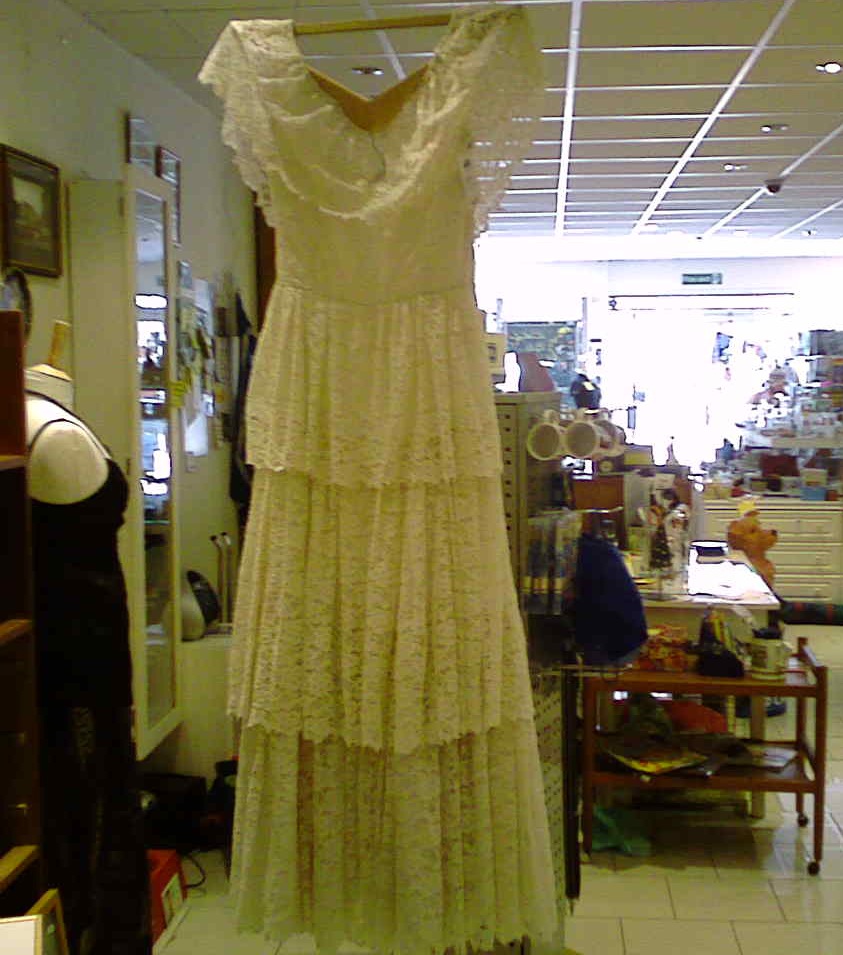
Many thanks to the generous donor of surplus stock and display units from a gift card shop which closed recently. The rotating units are ideal for our stock of paperbacks, and there are beautiful cards for all occasions at excellent prices.


Paperbacks for your summer reading


Candles that play Happy Birthday to You!

Fantastic cards at bargain prices


All at our 61 Burleigh Street charity shop now. Stock up and never be without a card for that  anniversary that just slipped your memory. 

Every pound you spend keeps our animal clinic running for another five minutes!


Thursday, July 15, 2010

Frenetic week

Mare and foal looking for a cool spot under the bridge over the Cam
Took this picture of a mare and her foal looking for somewhere cool last week when I was cycling round all the Cambridge vets to ask them to display our volunteers meeting posters.

We got a reasonable amount of media interest in our appeal for more volunteers and donations to our charity shops, but I still feel there's a level of scepticism about whether we really need money. Answer: "Yes, we really, honestly do need money; we don't have some mystery source of funds and if we don't earn enough to pay our bills we will eventually close."
The volunteer meeting this evening did at least attract a few new people, some of whom are interested in helping in the shops. These have to be the highest fundraising priority at the moment because extra effort spent there immediately translates into more cash.

Holding the meeting at the shop meant we could use it directly as an opportunity to encourage everyone present to browse and buy, and we raised over fifty pounds. 

Next meeting will be Thursday 19th August 7.30-9.30pm.

Wednesday, July 14, 2010

RIP Snowy

Sad email from Karen who adopted one of our oldies to let us know that Snowy had to be put to sleep last week because she developed untreatable thrombosis as a result of her long-standing heart condition. However, the positive side of this is that Snowy had several years of good life after being adopted by Karen under our Elderly Animals Rehoming Scheme (EARS), whereby we agree to pay part of the cost for age-related problems of older animals adopted from us.

EARS is just another reason why we must manage to increase our income, because without it we couldn't rehome nearly as many older animals, yet if we don't rehome them they're costing money sitting in kennel places that aren't suited to offering the kind of TLC oldies really need.

Wednesday, July 7, 2010

Volunteers Meeting: Thursday 15th July

Next volunteers' meeting will be 7.30-9.30 pm on Thursday 15th July at our Burleigh Street Charity Shop (number 61, next to Primark). If you are coming by car, there is free parking after 7pm at the Adam and Eve Street Car park a few minutes walk away. (Adam and Eve street runs parallel to Burleigh st. and there's a pedestrianised link passage between the two.)

Anyone interested in the work of the branch will be very welcome.

We are particularly looking to recruit more volunteers to help in the shops; collecting donated sales items; fundraising and helping at events.

Tuesday, July 6, 2010

The Rescue Dog: A Guide to Successful Re-Homing


This is a really excellent little book which explains why rescue organisations have rules on rehoming which may seem needlessly obstructive to would-be adopters. Taking on an adult or nearly-adult dog who may have had bad experiences cannot be the same as starting with a pup who knows no other home than yours.

The authors are possibly a bit over the top about the degree to which rescue dogs are likely to suffer from fearfulness or anxiety — many dogs who need rehoming are stout, cheerful characters who take life in their stride. However it may save lives by helping owners to recognise that their new dog is not being difficult or "challenging" and just needs help to settle in and feel safe.

Monday, July 5, 2010

The Badger (New Naturalist Series)


Just out and indispensable reading if you want to understand the facts behind the debate over badgers.

Sunday, July 4, 2010

Another action-packed Saturday, and not in a good way

Day started at 5.20 am with a call from a clinic client whose cat was in labour. At least she was responsible enough to have got the cat registered, so it was possible to ask one of the night-duty vets to give her an advice call back. Judging from my side of the call I think mother cat was probably OK, but I suspect the kitten she'd had trouble delivering probably had some kind of congenital malformation and didn't make it.

Usual morning routine of washing cat dishes and bleaching litter trays, then to the shops to do the banking and on to Arbury Court greengrocer's shop to exchange their collecting tin. THANK-YOU to all the customers and staff who fill it reliably as clockwork every three months!

The view heading towards Arbury over the river
Nearly there when the mobile went off with a caller who didn't know his dog was pregnant until she had puppies two days ago. Two of them had died in the meantime, and the bitch was now so poorly that he didn't think she'd survive the weekend without treatment. Considering that she must have been ill first thing, WHY couldn't he have phoned three hours earlier when our clinic would still have been open? Finally agreed to cover first aid at a private vet (which we'll try to get him to pay back) and told him to get her down to our clinic on Tuesday, if she survives.

Got into the greengrocer and it rang again; this time an elderly gentleman with equally elderly Westie who IS registered at the clinic and had had a fit. Took their details and asked for him to be given a call-back from one of the vets to discuss if she ought to be seen that day as an emergency. Life would be a lot easier if all pet owners were more like him. At least the people in the shop had an opportunity to see their donations in action.

Back for some lunch, then to the shop for the rest of the afternoon. Either Bettina or Anne has used her initiative and produced a home-made A-board to increase our visibility.

Busy putting out more donations to fill up gaps as items sell, but hampered by ongoing phone discussion about a mystery cat with a bad leg, which seems to have been signed over to us for rehoming, but nobody knows why or who authorised this. Unfortunately it looks as though it is definitely Our Problem, so Janine will arrange collection and transfer to the kennels. The bad leg has apparently improved with no treatment other than metacam (for pain and inflammation).
Pretty vase donated to the shop this week

Friday, July 2, 2010

David Grant on Vetpulse.tv on the issue of Status Dogs


"Status dogs are just one part of the general social problems of the inner cities."

Talk given to veterinary students at the University of Nottingham, 20th May 2010

Monday, June 28, 2010

Fly Strike!

No apologies for returning to this horrid subject, but anyone of a sensitive disposition may prefer not to follow some of the links.

Hot and humid weather is perfect for carrion-feeding flies and there are lots of them about. Unfortunately they don't only feed on rotting substances—they will just as happily lay eggs on living animals who have open wounds, sores of any kind, or wet or soiled fur/skin. Rabbits are particularly vulnerable, but any animal which is having difficulty keeping clean or has matted fur will be at risk.

Sadly the rabbit brought to us late on Saturday evening had to be put to sleep because he was too badly damaged by maggots to be saved. Fatal maggot injury can occur within hours of flies laying eggs on an animal, which is why it is so important to check "at-risk" animals twice daily.

There are more details about preventing fly strike in pets and farm animals on the national RSPCA website (not upsetting) and a truly horrible report of a suffering cat in Kent online.

If you find fly eggs or maggots on any animal it is important to contact a vet immediately. Fly attack is a particular problem for rabbits and there are special veterinary products which can be applied to prevent eggs developing into maggots. Ask your vet about this when your bunnies go in for their Spring myxomatosis boosters.

Sunday, June 27, 2010

I knew it!

More black propaganda from people who will not have to pick up the pieces if we go under.

When we got the original circular from HQ asking us not to include "beauty" classes in any official RSPCA fun dog shows I must admit I was apprehensive that it could be used against us. Of course if we did run classes where "cute" appearance was the main criterion, that could be used against us too. 

I'm not entirely convinced that the real problem with show dogs is judging by appearance so much as judging by distorted ideas of what is desirable appearance.

This picture is a modern Basset hound. 


This is one from 1915.

The older dog is much less exaggerated and has more normal back legs and less folded facial skin. That's no guarantee that he didn't have ectropion or any of the other ills that plague some  pedigree breeds, but I can't help thinking that selecting for dogs that looked more similar to him would be likely to improve the general fitness of Bassets.

I'm afraid we are seeing a pattern here.

The RSPCA is fundamentally a charity which provides services for animals (welfare law enforcement, veterinary treatment, rehoming etc.) and also campaigns on issues which affect animal welfare.

It's the services which make the campaigns credible: people with frontline experience of animal welfare work are likely to know what they're talking about and people who are putting unpaid effort into practical ways of improving animals' lives must genuinely care about animal welfare. The size and unified nature of the RSPCA probably impresses politicians with the likelihood that we're backed by substantial numbers of citizens with votes, but to some extent that's a secondary consideration.

Because of this credibility, virtually any person or organisation which wants to affect animal issues (whether to achieve change or prevent it) sees the RSPCA as a gatekeeper: government is likely to believe us if we say there really is a welfare problem, but it will also believe us if we say things are more complicated than other animal campaigners think. Many people who genuinely care about animals but have an overwhelming concern for one area, such as animal experiments, or factory farming, see us as the only thing which is stopping them from succeeding, because we're not giving unqualified support to whatever it is they want.

Add on those, like the kennel club, or foxhunters who see us as the organisation with enough clout to stop them going on doing what they like, and the result is that threats to our ability to provide the welfare services are used as blackmail to change the welfare policy. This is the, "I'll never give the RSPCA another penny and I'll tell all my friends unless you .... (abolish fox-hunting, bring back fox-hunting, say pedigree dogs are healthy, say pedigree dogs should be abolished—fill in the blank to taste)" route.

On top of this, we're never going to be able to provide the service level many of the public expect, so we have a constant background of genuine complaints plus spurious ones from people who are aware that the most effective way to strike at the RSPCA is to hit our ability as a service provider. None of this is helpful when we need to recruit volunteers to work at the fairly mundane jobs that are essential to keeping the services going.

Friday, June 25, 2010

Ethan turns out to be Felix!

We took in a ginger cat a little while ago after he was hit by a car and suffered head injuries. When he was fit enough to go to a new home we posted his details in our rehoming gallery. To everyone's delight, his owners recognised his photo and he's now reunited with them.

This shows the benefits of advertising our animals online, and also that, if you've lost an animal, one important avenue to search is local shelters' lists of animals in need of homes. Obviously you should also contact them direct, but a picture is much more easily identified than a description in words.

Anyway, nice to have a happy ending.