Saturday, July 9, 2011

First pics from the dog show

These were taken from my phone, and some of the people with proper cameras will have better shots, but they do give a feel of how the day went.

In spite of a few heavy showers everyone seemed to enjoy themselves and we raised over £500. The Shelford Feast organisers have said they would be happy to consider letting us do the show as an annual event and it looks as though there's lots of scope for improving our total next year with the experience gained from this time.

Rain clouds blowing up


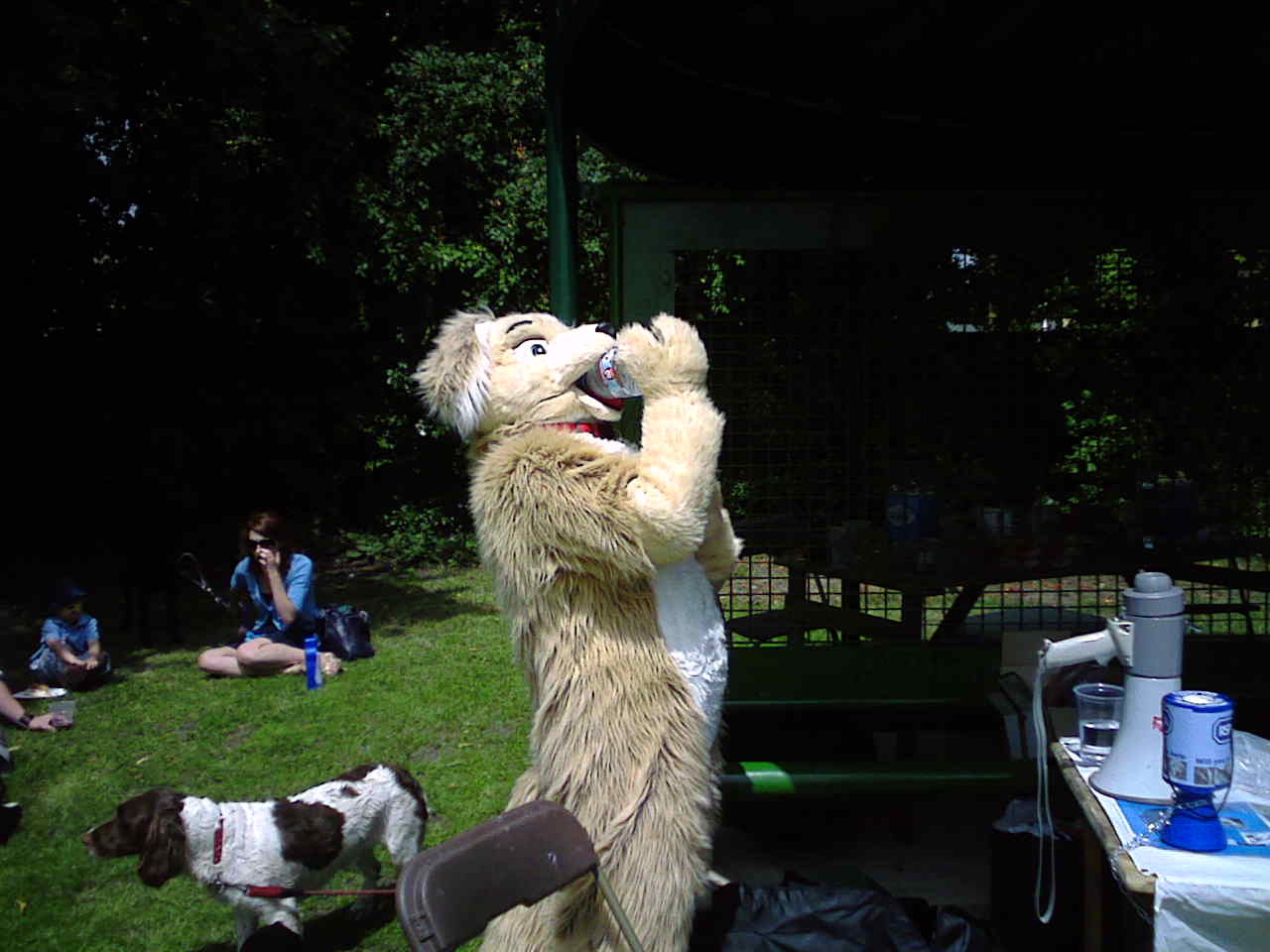
Heroic collector in dog suit


Rehydrating our shaggy dog collector


Face painting


Judging the best veteran


All in all this was a really positive event, with several visitors taking membership leaflets, and some of them taking advantage of the opportunity to get their dogs chipped.

Friday, July 8, 2011

Crisis upon crisis

Message from Vanessa, one of the Animal Collection Officers, to say she's just dropped off four seven week old GSD X Rottweiler cross pups after getting them signed over to the RSPCA.

Meanwhile, the other side of the county, one of our Inspectors is desperately trying to arrange treatment for an elderly dog owned by an even more elderly gentleman with no money. He's been quoted over £300 at a private vet.

We need more volunteers!


Fosterers, fundraisers, shop helpers, donors... You name it, we need it!

Tuesday, July 5, 2011

Horrendous morning at clinic


These pictures are a bit dark, but do at least give some impression of how swollen and sore this poor stray cat's pads had got. The pic immediately on the left is actually the underside of one of his front feet, and you can just see the claws round the outside.

I have a horror of really bad injuries to cats' feet ever since the time I trapped a feral tom who was literally walking on bone because abscesses had rotted away all the flesh of his pads.

To my enormous relief, the vets think this cat's problem is an immune-related dermatitis which is causing horribly painful swelling and bleeding, but isn't destroying the tissue in the way an infection would do.

He's got to go on steroids and antibiotics for a week and be confined in a hygienically-clean cat pen while (hopefully) the open, bleeding wounds heal up. Unfortunately all this will mean he can't be released where he came from as he'll almost certainly need to take steroids for the rest of his life, so he's yet another kitty looking for a permanent home.

The clinic was just non-stop busy, with two difficult questions about clients from long distances which illustrate the enormously worrying vet treatment situation. First was a gentleman who takes in rescue dogs and had been in the habit of using our clinic. Ironically he lives just next to Block Fen animal home in Wimblington, but we just can't allow him to keep registering extra animals. Second, and much more troubling was a couple from just outside our catchment area who'd been quoted £500 (which they didn't have up front) by a private vet to operate on their cat's broken jaw. We can't let them register because the University simply wouldn't accept it if we did, but I'm afraid they will be another group of people who'll go away and tell all their friends that "the RSPCA doesn't care about animals". 

I do care; we all care, but we do not have unlimited funds, and, like the PDSA, will be able to help fewer and fewer animals every time someone withdraws support because we can't help with everything.

Update
Three weeks on Taylor's feet look a lot better. The really bad one (shown in the photos) is still red and sore, but the swelling's gone down, and his other three feet look almost completely normal - would look normal if you didn't know what you were looking for.

Monday, July 4, 2011

Animal Welfare Statistics for June

In June our clinic treated 274 dogs, 106 cats, 13 rabbits and 5 miscellaneous "small furries" - a 6% increase compared with June 2010. We neutered 20 dogs, 3 cats and 5 rabbits, and chipped 13 dogs and 7 cats.

We rehomed 2 dogs and 2 cats, but took in 1 dog and sixteen cats, so we urgently need more offers of permanent and foster homes. Please email rehoming@rspca-cambridge.org.uk if you are interested in adopting or fostering animals.

Sunday, July 3, 2011

Repeat AGM

We didn't get the 10 members needed to hold a valid Annual General Meeting, so will be trying again on 2nd August. If you are an adult member of the branch you'll receive your notification by post towards the end of this week. 

The repeat meeting will be at 61 Burleigh Street, and will be slimmed down to the bare minimum required to elect a committee to keep the branch in existence, so it should only take about 30 minutes. 

I very much fear that the problems with branch AGM's are just symptoms of something wider and more troubling. In our area, roughly 5% of the population make use of some of our branch services during the course of a year (this isn't just the clinic; it's also things like helping with injured stray animals, advice and so on and it's not necessarily the same 5% each year). 

Roughly 0.2% of the same population are branch members, and roughly 0.02% are active volunteers.

Either we convince more people that we are not a statutory service and without participation there will be no service, or in a few years we will be a "downed branch" with no help for owners with sick animals and minimal ability to rehome animals from the inspectorate.

If you are not a member of the RSPCA, please consider joining. You can do it online by going to www.rspca.org.uk/membership, or pick up a leaflet from any of our charity shops. Membership gives you a vote at branch and national level and means you can (if you wish) stand for election to your local branch committee and to regional and national trustee boards. 

Saturday, July 2, 2011

Dining table for sale at Burleigh St charity shop

Varnished pine dining table to seat 6 people, plus chairs, for sale £80.

Wayne and Ffiona managed to collect it from the donor in their hatchback, but you would need a car with the capability of folding down the back seats to take it away.

(The crockery is not included).

Thursday, June 23, 2011

So, what needs to be done?

Really not a huge amount per individual person. Our current problem is that the number of people who see the RSPCA as a service to be used is just too big in comparison to the number of volunteers who are struggling to provide the service.
  1. If 400 extra people donated just one carrier bag of saleable items at any of our charity shops, it would raise £4,000
  2. If they all completed a gift aid form that would add another £1,000.
  3. If 20 people with an interest in books and reading volunteered for half a day each week at our 2nd hand bookshop on Mill road they'd raise an extra £12,000 each year.
  4. If 5 more people volunteered for half a day each week at our Burleigh St shop they'd raise an extra £200 per week — £10,000 over the course of a year — by increasing the rate at which donations could be processed for sale.
  5. If 100 extra people visited our shops each week and all made just one purchase at each visit it would raise £13,000.
  6. If 200 people from our branch area did nothing other than join the RSPCA, we would have £1,000 as our share of their subscription fees.
  7. If 20 of them regularly attended our AGM each year we wouldn't have the annual worry that the AGM would be invalid and need to be held again,  due to low turnout.
  8. If 2 of them were prepared to join our committee it would mean we could be certain of having enough trustees to comply with the regulations for a valid RSPCA branch. 
  9. If 100 people each volunteered to collect for just one hour during RSPCA week (and were prepared to collect their tins etc. from us rather than having one of us deliver it to each of them) they'd raise £2,400.
  10. If ten people each got together with friends and organised their own fundraising event (coffee morning, open garden, car boot sale etc.) they'd raise £1,000.
That would secure the basic fee we have to pay for veterinary services at our clinic and mean our existing fundraising activities would comfortably be able to cover the additional costs of boarding and rehoming injured strays and cases from the Inspectors and ensuring that animals needing surgery could be treated.

Tuesday, June 21, 2011

Desperately worrying

Vets' charges seem to be going through the roof. We've just been quoted £400 for an x-ray on one of our rescue dogs to confirm that her broken leg is now healed. We may be able to get some reduction by shopping around, given that there's no desperate urgency to have it done immediately as it's simply confirmation she can stop being kept on restricted exercise. However it's a desperately worrying trend as it must indicate that an owner with no pet insurance is facing a £2k bill if their dog breaks a leg, which must mean that, for many dogs, a broken bone is now a death sentence.

Anyone who reads Cambridge Evening News will have seen the excellent write up they gave for our clinic's 75th anniversary. I originally wanted my quote about the situation of our clinic to say that around 4,000 animals are at risk of being put to sleep by their owners if we can't raise the money to stay open, but was advised to change that to say they were at risk of needing to be rehomed to avoid the possibility that, "RSPCA says 4,000 pets will be put down" would become the story. I'm not totally sure I was right to agree, because I think there's danger in trying to minimise the real situation, so as to put over a positive story, because it means no-one takes us seriously until we actually do fall off the cliff. 

Ultimately it's not physically possible for 43 volunteer workers to raise enough money to fund a service for over 3,000 people and we're very close to the point where we either succeed in recruiting more help or everything simply falls apart.

Update
I see from their Facebook page that the PDSA are evidently in difficulties too as they appear to be having to be more restrictive about the conditions to access treatment at their clinics.

Walkies?

We periodically get enquiries from people needing help with socialising (rather than training) young dogs, so I was interested to find there is a local group who organise monthly communal walks: Big Walkies. Most of their events seem to be concentrated around St. Ives, where the main organisers live, but they do list some walks in Milton Country Park, and I would imagine they may schedule more this side of the county if they get enough interest. 

Membership is free (they request a donation of £1 per dog per walk to cover admin costs), so this may be an option for people who can't afford formal dog training classes but want to encourage their dog to develop a positive attitude to other dogs.


They have some sensible Terms and Conditions which walkers are expected to comply with:

  • Ensure that any dog(s) I bring to Big Walkies will be fully vaccinated.
  • Have valid pet insurance for any dog that I bring with me OR agree to financial liability for any injuries received by myself or my dog, as my pet is uninsured. (If your dog happens to cause/receive injury on a walk we encourage that any costs occurred are claimed via your pet insurance or via the civil court. Big Walkies accepts no liability for personal or dog injuries).
  • Have full control and responsibility for any dog(s) that I bring with me to Big Walkies.
  • Ensure that any dog(s) I bring has a fair temperament (due to member safety we cannot accept known aggressive dogs on our walks. We are here to help dogs socialise, but will not take any unnecessary risks therefore if a dog becomes aggressive/causes injury towards either another dog or a person on the walk they will be asked to muzzle their dogs on future walks or even asked to leave Big Walkies group).
  • Ensure that any mess that the dog(s) that I bring to Big Walkies creates is picked up and disposed of legally by myself.
(Disclaimer: as always, the RSPCA can't take responsibility for events that are organised by someone else).

Sunday, June 19, 2011

Just donated at Burleigh St

This pic doesn't give a really good impression of how large these dolls actually are. They're porcelain with attractive costumes—rather the kind of doll little girls had in Victorian novels, although I think these are much later replicas.

Many thanks to the generous person who brought them in.

Saturday, June 18, 2011

Who owns Tinker?

I'm fostering a very elderly fluffy grey cat who must have an owner out there somewhere as she's wearing a collar that looks almost new and is in good body condition considering her age - vet estimates at least 15+.

Unfortunately she's not chipped and her collar has a bell but no tag.

Monday, June 13, 2011

Cats!

I don't know what's got into the cat population of South Cambs. Over the past seven days we seem to have had nothing but calls about sick or injured strays, mostly turning out to be very old cats with "senior citizen" problems rather than traffic injuries or infections. 

I can only think that some of them are ones who don't go out unless the weather is really nice so that the neighbours don't normally see them. Many old cats do look thin, so from the neighbours' perspective it's not unreasonable to assume that the unknown cat suddenly appearing in their garden is lost and thin through lack of food. At least two of the current crop turned out to have owners who were very distressed that their pets had apparently been "kidnapped", and of course it's potentially quite dangerous if cats who are on medication are removed and don't get their pills at the correct time. There's also the worry that some owners may not know how to search for missing cats—unless they phone round vets and animal homes rather than relying on putting up posters they may never trace a cat who's been picked up as a stray.

I can't stress enough how important it is to ask around and put up notices before insisting that animal welfare charities should take away an apparently stray cat who is simply thin and somewhat unkempt-looking, rather than having any obvious injuries or infections. Removing an owned elderly animal is stressful and potentially dangerous to the cat and can cost the charity hundreds of pounds repeating veterinary tests which the real owner may already have had done.

Sunday, June 12, 2011

Volunteer Opportunity: animal fosterers

We urgently need to recruit more volunteer foster homes for animals who are recovering after treatment.

These are usually cats (some dogs) who are recovering after surgery to repair broken bones and need to be confined in a cage to prevent them from running or jumping until the bone has healed. This is essential because the repaired section of bone remains fragile for several weeks after surgery and can break again if it's subjected to sudden force from violent movement.

Ideally fosterers would be fairly close to Cambridge as most of the animals will need to come back to our clinic there for several re-checks before they are full fit.

If you think you might be able to help by fostering animals, please email rehoming@rspca-cambridge.org.uk


Saturday, June 11, 2011

Volunteer opportunity: Phone Rota

We need helpers with answering our emergency contact number on a rota basis.

This would involve having calls forwarded to your own telephone for an agreed period - e.g. every Wednesday between 9 am and 1 pm.

The most important reason for maintaining the rota is to make it possible for clinic clients to phone in for an emergency out of hours appointment if their pet has a problem that can't safely be left until the next normal clinic session. This is why we try to make sure that someone is available to pick up an incoming call within ten minutes.

Other calls are mainly from members of the public needing help with animal-related problems and many can be solved by putting them in contact with the main RSPCA control centre, dog warden service etc. 

The rest can usually be divided into ones asking for information about using the animal clinic (e.g. opening times, charges, what proof of benefit is required) and requests for help with out of hours veterinary emergencies where the owner is not able to pay for a private vet to treat their animal.

Full training will be given.

Thursday, June 9, 2011

Animal Welfare Statistics for May

Badger is looking for a home
During May 2011 our clinic treated 245 dogs, 81 cats, 9 rabbits and 8 miscellaneous "small furries".  We neutered 12 dogs and 6 cats and chipped 9 dogs and 6 cats. We rehomed 3 dogs, 4 cats and 2 guinea-pigs.

I'm getting more and more despondent about the number of desperate calls we receive from areas so far outside our catchment area that there's no practical way we could possibly agree to see them. Most recent was from Croydon in Surrey, which I think I was able to help by putting the caller in touch with a PDSA clinic closer to her home. More worrying was from a private vet clinic near Peterborough, whose receptionist was phoning to ask where she could send a client with no money to get his pet treated free, and was shocked to find the answer is: there isn't anywhere. Unfortunately I'm very much afraid more and more vets are having to make a choice whether they will put down treatable animals, or give owners time to pay, knowing that many never will.

Dealing with ringworm in shelters

There's an authoritative fact sheet about ringworm control in a shelter setting on the UC Davis Veterinary School's Shelter Medicine site. Be aware that it's based in the US, so some of the veterinary preparations mentioned may not be available in the UK. However it does give a very clear explanation of exactly why ringworm is so difficult to deal with in a situation where there is continual pressure to take in more animals who will suffer or die if no space is found to house them.

Wednesday, June 8, 2011

Learning from the misfortunes of others

For shelters and animal centres

Most obviously the importance of avoiding panic actions and the importance of using the best scientific evidence to confirm exactly what is happening.

For those in charge of health and safety decision-making

The need to respect the emotional well-being of staff and volunteers—in terms of unhappiness and stress the efforts to protect workers were probably much more harmful to them than the original infection risk.

For animal advocates

Treating large animal charities as if they were quasi-governmental bodies makes things worse. One of the reasons why OSPCA was reluctant to go down the route of expensive treatment and testing to eradicate the infection was a genuine shortage of funds (like the RSPCA they have a lot of money, but spread very thinly due to the demands put on them). And one of the reasons why large animal charities are short of resources is because they're treated as though it's self-evident that they already have enough funds.

Too many animal advocates try to punish the large charities for not having enough funds, or set up organisations to "fill the gaps", so diverting resources away from the animals in most desperate need of help.

Bottom line: the majority in society as a whole dislikes cruelty and wants it stopped, but it does not feel the same intense bond with animals that we do. Transferring SPCA functions to government or local authorities would almost certainly mean more, not less, pressure to be "realistic" and "responsible" (for example to accept killing as the quickest way to eliminate ringworm and reduce the risk of human infection). Demands that the government "does something" to make animal charities more accountable are quite likely to translate into requirements for higher calibre (and therefore more highly paid) management.

One of the volunteers at the Ontario shelter has a blog, though, sadly, it looks as if she got disheartened and stopped posting in July last year.

I think one of her last posts is so important for the general truths it has to say about working to protect animals that I'm reproducing most of it here:

"The shelter will, once again, fill up, and those animals will need our help. I don't agree with their decision, but I do believe in the organization's long-term goal of making sure each and every pet finds a safe forever-home. Thousands of animals have been successfully adopted from the shelter, and with your assistance, more will be adopted in the future. If we truly want to make a difference, we have to educate our kids, friends and neighbours -- don't let your dogs or cats wander, neuter and spay them, and report all cases of abuse. 


Volunteer. Be a part of the team that will make sure this never happens again. And if you're as heartbroken as I am, then just imagine how this has destroyed the souls of the wonderful staff who care for the animals each day. They deserve our support and encouragement. I don't know how they will deal with the emotional fallout from what has happened."

Monday, June 6, 2011

Ringworm and animal shelters

The Ontario SPCA in Canada has just published the findings of an independent investigation into the handling of ringworm cases at their York region branch last year. It's extremely long and detailed (the link above goes to the summary), but contains lots of very important discussion, not just about how shelters should deal with the issue of ringworm infection, but also about the role SPCAs play in society. 

One thing that comes over very strongly is that the report's co-authors (the former Dean of Ontario Veterinary College and the former Chief Justice of the Ontario Superior Court) essentially looked at everything the SPCA was struggling to do and recoiled saying no-one could possibly cope with it all on the kind of budget they have available.

Ontario SPCA is one of the few SPCAs round the world which have statutory powers and duties to investigate and prosecute animal cruelty entirely independently of the police. It also has virtually sole responsibility for stray animals and apparently an open-ended commitment to take in unwanted animals. Unlike the RSPCA it does get some government funding for its law-enforcement role, but the amount is quite low.

This means its shelters are continually under pressure to house the unwanted and strays and also any animals taken into care as a result of ongoing investigations and prosecutions. Recent legislation imposes conflicting obligations to take all possible measures to prevent spread of disease, while forbidding vaccination of incoming strays because there is no way to get the owner's permission. 

Ringworm is particularly frightening to any shelter because it can infect humans as well as most other mammals, but it is a fungal disease (nothing to do with worms) which normally causes nothing more than self-limiting skin disease (possibly no visible disease at all) in healthy people and animals. 

This means there are really serious moral issues about dealing with cases in a shelter. On the one hand it's essential that the disease is contained (no-one is going to adopt from a shelter if it means all your children end up itching and scratching). On the other hand it's very difficult to justify extreme measures, like mass culling, to control something that the vast majority of people and animals will throw off with  quite minor  treatment.


In OSPCA's case the misery seems to have been compounded by the inherent inaccuracies in scientific tests for ringworm which meant shelter management could never be quite sure whether it was still present or not. The final straw came when staff and volunteers had become so distressed by the probability it would lead to animals being killed that they were refusing to notify management of possible human ringworm infections they were experiencing themselves. This was illegal under Ontario's Health and Safety legislation and the Ministry of Labour then stepped in.  


The independent investigation was set up in response to a campaign against the shelter sparked off by reports that all animals currently in its care were to be euthanased in order to stamp out infection. The failings which it did expose seem likely to fuel further campaigns and I think it's likely these will have the opposite effect from that intended by reducing funding for the shelter while increasing the amount of resources they have to divert into health and safety compliance, and possibly requiring them to set tighter limits on the numbers of animals they can house.


It seems likely that there never was an "epidemic" of ringworm and that the infection was in fact limited to the original group of very matted long-haired cats who had been taken in at the start of the incident. 


Ironically this report comes out as the e-coli salad vegetable incident demonstrates just how difficult it is to pin down the origin and spread of disease, even with all the resources of a government health department.


Incidentally, infections are not a one-way-street: animals can sometimes catch nasty bugs from humans  too.

Friday, June 3, 2011

Next dog show planning meeting Thursday 16th June

Holly and Graham, winners of our last show
This will be a combined dog show planning and volunteers meeting at the Corner House Pub, Newmarket Road, Cambridge, starting at 7.30pm.

Anyone interested in helping with the dog show on 9th July, or volunteering with the branch in general, would be very welcome. The Corner House does excellent veggie or non-veggie meals if you would like to eat as well as chat.

Monday, May 30, 2011

Adding up the costs

Some days I really worry that I am channeling the Reverend Arthur Broome, famous as the original founder of the RSPCA — but also for being thrown into the debtors' prison when he couldn't raise enough cash to cover the Society's outgoings.

Everyone seems to feel entitled to something from us, and it is rapidly getting to a point where things are completely top-heavy, with the number of people who think we should be doing, or paying for, something hugely more than those who want to help our work.

Part of the problem is that there is no useful feedback to animal owners to impress on them that they must do some planning about what they'd do if their pet was ill or injured. So many have no idea it may cost £100 just to have their animal seen—not treated—by a vet, on a Sunday or bank holiday. At that point tears and pleading won't do any good; lots of them genuinely don't have the ability to lay their hands on that amount of money at short notice.

If I'm unlucky and we get five of them in a day, then it's £500 spent that we can't afford—and most probably the animals will be put to sleep because actual treatment would have meant another £200-£600 that the owner doesn't have. Those five individual owners may have learned a terrible lesson (or they may simply go away thinking their pet died because we didn't care enough to pay the whole amount for treatment), but it doesn't have any impact on all the other people out there with pets and little or no money. 

So it's going to keep on happening again, and again, and again so far as I can see unless we can get on top of a system that gets treatment for the animal but does enforce some payback from the owner. Sadly hardly any vets will allow payment by instalments now, because people don't pay, so the animal charities are the only available solution.

It's no good saying it's the owners' responsibility to have enough money; or to take out insurance; or that they could have saved enough by cutting out holidays, because what matters is having the money available on the day, which most of them don't, and it's the animals who pay the ultimate price. 

Looking back over the past few months I am wondering whether the figures for euthanasia of unwanted animals are an almost pointless statistic because far greater numbers of treatable animals are being put to sleep through lack of funds, or, worst of all, dying in pain because they never even reached a vet. I'm almost certain that some owners ring up a surgery; are told the charge is £100 and just give up and wait for the animal to get better or die.

Sadly, I think being told their pet is going to be killed because they can't produce the money for treatment is the first experience many people have of facing up to responsibility that no-one else is going to sort out for them. All their lives they're being told they can't be expected to deal with things because they're disadvantaged, then suddenly they're slammed against the reality that their animal depended on them and no-one else is going to help—except us, and we simply can't raise enough money to do it.

Sunday, May 29, 2011

The two giant chess pieces

These giant chess King and Queen pieces were donated to our Burleigh Street shop last Sunday.
(Update: now sold).

Saturday, May 28, 2011

Branch AGM and committee nominations


View Larger Map
The Cambridge and District Branch's AGM will be on Tuesday, 28th June at the Friends' Meeting House, Jesus Lane, Cambridge (map)

Anyone interested in the work of the branch is very welcome to attend, but only RSPCA branch members are able to be included in the vote to elect the committee of trustees. 

If you are a branch member you will shortly be receiving the official meeting notice by post (some time next week as we are planning to stuff envelopes on the bank holiday Monday).

If you are a member and would like to stand for election, or to nominate another branch member, please take a look at the information about trusteeship on our main website. This page has a link to download an official nomination form.

If you are not an RSPCA member, but would like to join, you can do this via the RSPCA national website. It's too late to be eligible to vote in the current elections, but you would be able to next year.

Friday, May 27, 2011

Volunteer opportunity: Donate, Don't Dump Day

Gracie is looking for a home

Could you organise a "Donate, Don't Dump" day at your workplace, school or college?

The idea is that you ask everyone to try to bring in one item that's suitable to be sold in our charity shops.

Almost everyone has something that's too good to throw out but they never use or wear.

You can either bring the collected items to our shop, or we can collect them provided we have enough warning in advance.

This opportunity would be particularly suitable for school pupils who are not old enough to volunteer directly with the branch as it can be done at school (provided your teachers are happy with the idea.)

If you would like to organise a "Donate, Don't Dump" event, please email camshop@rspca-cambridge.org.uk or newmarket@rspca-cambridge.org.uk (depending on whether you are local to Cambridge or Newmarket.

Tuesday, May 24, 2011

Sunday at 61 Burleigh Street

Thank-you for all the fantastic donations, including this incredibly realistic soft toy, some superb pictures, delightful Hello Kitty charm necklaces, and a pair of two foot high chess pieces.

Ffiona, Wayne and Phil have been adding more shelves to our books and media section.

We've also got a selection of May Ball frocks and suits and lots of fresh summer blouses and tops which are flying off the racks as fast as our volunteers can steam iron them and put them out.

Drop by for some fantastic bargains.

We urgently need to increase our fundraising to meet the increasingly worrying costs of veterinary treatment, which I will discuss in another post.

Monday, May 23, 2011

Animal Welfare Statistics for April

During April our animal clinic treated 224 dogs, 78 cats, 3 rabbits and 5 miscellaneous "small furries". We neutered 16 dogs and 7 cats (cat spay/neuter numbers are low at the moment because Cats Protection is running a free neutering campaign by voucher, so it's generally more beneficial for cat owners to use these rather than use the clinic). We microchipped 13 dogs and 9 cats.

Sunday, May 22, 2011

Volunteer opportunity: Minute taker

Basically this involves attending our regular monthly committee meetings, taking rough notes and then writing up minutes of action points agreed and circulating them by email before the next committee meeting.

It may seem fairly trivial, but for the effective running of the branch it's essential to have an accurate record of what was agreed and who has been "volunteered" to action the decisions. The accountants who prepare the annual independent examination of our financial affairs which is required by law expect our records to include minutes of all meetings where decisions were taken.

This would be an excellent opportunity for someone with note-taking skills who is interested in learning more about the activities of RSPCA branch committees, but not yet prepared to take on the responsibilities of full trusteeship. Or, of course, for someone who DOES want to be a trustee and would like to get started with useful work that doesn't require huge amounts of time.

If you might be interested in this, email volunteering@rspca-cambridge.org.uk

Saturday, May 21, 2011

Dog Show Helpers needed

These are some one-off volunteering opportunities which might suit people who don't have time for regular volunteering. We will be holding this year's dog show on Saturday 9th July as part of the festivities in the week of the Great Shelford Feast.

We need to recruit:
  • "Runners" to take class entry details from the registration desk to the judges.
  • Registration desk volunteers to take entry money and book dogs and handlers into the right classes.
  • Helpers to set up and take down the show arena and stands.
  • Rosette clerk to see that the judges have the correct rosettes and other prizes to hand.
  • Before the day we need people to help with publicity: making and distributing posters etc. to local vets and other places where dog owners are to be found.
  • Helpers to run stalls, tombola etc. and generally brandish collection boxes at people.
  • Anyone with a large car or other vehicle suitable for transporting tables from Cambridge.
If you can put up a poster in a local shop, works canteen etc.  it would be a great help to us. Email volunteering@rspca-cambridge.org.uk if you would like some posters or fliers.

Friday, May 20, 2011

Phones and phone calls

Give the UK public a phone number and they will call it—except when they are suspicious that it is a premium rate line, when they may phone to ask me to call it for them.

The RSPCA National Control Centre takes over a million calls every year. That's roughly two calls every minute, and, since these won't be evenly spread over the 24 hours it gets hammered at peak periods. This is why calls take some time to be answered and why the control centre staff may sound unsympathetic—they can't spend time on anything besides getting down essential details that will enable the field staff to evaluate and deal with the issue.

Judging by the number of calls we get direct to the Cambridge branch, the total number of calls to all the RSPCA branches combined probably amounts to another million.

Altogether that's a LOT of phone calls. We try to deal with it in various ways, none of which are entirely satisfactory. Some branches have set times when calls will be answered, some have rota systems of volunteers, some have a phone that's permanently on answerphone and will sift calls and return those they can help. The nearest thing to an ideal setup is probably a rota of volunteers with other tasks that they can be getting on with between calls, although it does mean a lot of interruptions, and most branches simply don't have enough volunteers who can be available during the 9-5 period when most people are at work.

Then there's the vexed question of whether there should be a single branch number for everything or several numbers that can be treated differently, such as an emergency mobile number that's answered immediately, and an enquiry number that's answered when someone happens to be about.

This would probably work except that callers to the enquiry number tend to get fed up because no-one answers and try the emergency number. If you happen to be the person with the mobile in their pocket and you are on a bike this can make your journey a bit of a frustrating process.

Even for the National Control Centre with its staff who are employed to do nothing but answer RSPCA calls, there have to be trade-offs between various factors to generate a "least-worst" solution. The core staff work all the year round and develop a lot of background knowledge. At busy times of the year they are supplemented by pulling in extra people from the parent call centre company in order to keep waiting times before calls are answered to acceptable levels. These staff are trained, but they give slightly more of an impression of working to a script because they don't have the same depth of knowledge. The trade off here is between the need to keep down costs by using only the number of staff who are really necessary and the risk that animals will suffer if waiting times are too protracted and callers give up. At the end of the day it's pointless having a super-efficient system for taking calls if it doesn't leave enough funds available to actually deal with the problem once it's been reported.

Similar trade-offs apply when it comes to taking action following the phone calls; there is no point employing so many animal collection staff that there's no money left to pay the vet bills for the animals they collect. This is why we always ask callers whether it would be possible for them to take injured animals direct to the closest private vet, as this means the animal gets help more quickly and we can afford to spend more money on the actual treatment instead of on the process of getting the animal to the surgery. It's also why it's more cost-effective to pay for the use of private vets' existing facilities than try to set up lots of RSPCA hospitals which would all have overheads.

This can be upsetting for both ends of the incident—witness the usually calm RSPCA_Frontline's uncharacteristically sharp reaction to a follower who simply will not accept it's not possible to get a collection officer to her address instantly: "For animals in need - call 0300 1234 999. Swearing is unacceptable on Twitter and this account is also followed by children."

Ultimately the only solution is to increase our fundraising.

If you think you might like to volunteer to go on our phone rota, please email info@rspca-cambridge.org.uk 

Thursday, May 19, 2011

Spread the word about our animals who need new homes

Roxy is looking for a home


If you use social networking sites like facebook or twitter, or have a website or blog, you can help advertise our animals by embedding our Rehoming Widget.

This automatically updates to show photos of the latest animals in need of new homes.


To get the widget code, click the "get widget" tab on the icon below.


Copy the code it offers and paste it into your blog or web page, or use the buttons to spread the word on facebook, twitter and other social media.


Wednesday, May 18, 2011

Volunteer opportunity: transport organiser

This is the first of a series of posts I'm going to run on the various volunteer posts we are trying to fill within the branch:


We often need to transport animals (mostly cats, but some dogs and other small animals) at short notice. This will usually be from a veterinary surgery where the animal has been given first aid, going either to our own clinic for further treatment or to kennels or a foster home to be boarded until rehomed.

This transport is usually done by volunteer drivers, but it can be time-consuming phoning round until one who is available at the time can be located because of the unpredictable nature of the need. At present the task of phoning round is done either by me or by Janine, our rehoming co-ordinator, but this is starting to be problematic because we both have full time paid jobs so we can't easily do the phone calls until the evening.


We would like to recruit someone who would be willing to take on the task of linking up the volunteer drivers with the driving jobs needing to be done.

This would involve the volunteer being available to take emails or phone calls notifying them that transport needed to be arranged and then phoning round the volunteer drivers to find someone who was available.


If interested, the volunteer might get more involved in trying to recruiting more drivers.

If you think you might be able to help with this, please email info@rspca-cambridge.org.uk

Tuesday, May 17, 2011

Why do people hate the RSPCA?


Opening of the Cambridge RSPCA clinic 1936
The Telegraph's Pete Wedderburn has a column with the provocative title, "Why do people hate the RSPCA" to mark RSPCA week. Coming from a country where there is no strong, centralised animal welfare charity, he's clearly baffled by the amount of bile directed at a voluntary organisation which last year:

1. Answered 1,163,240 calls
2. Investigated 159,686 complaints of alleged animal cruelty
3. Issued 86,354 animal owners with welfare improvement advice
4. Rescued and collected 130,033 animals
5. Rehomed 64,086 animals
6. Treated and helped 210,970 animals in its hospitals and clinics
7. Spent almost £4m on veterinary care
8. Microchipped 67,388 animals
9. Admitted 16,429 wildlife casualties into its four wildlife centres
Opening of the Eddington RSPCA Clinic 1955

The number of foaming-at-the-mouth comment posts following the column illustrate what he means. However only a few weeks earlier the RSPCA achieved a pretty respectable 7th place in the Reputation Institute's annual survey of charities; comfortably ahead of household names such as Oxfam, Children in Need and the National Trust.

Why the discrepancy? I think it stems from the distinction between the attitude of the public in general and individuals with passionately-held special interests. Someone who is in favour of wild animals being permitted in circuses and someone else who thinks all kinds of animal keeping or training should be eliminated will be equally fed up about the existence of a large, middle of the road animal protection organisation which the general public likes and looks to for guidance. 


I suspect this also explains why, every year, we have such difficulty making the most of RSPCA week, because the general goodwill that puts two pound coins in tins isn't matched by willingness to go one step forward and volunteer to help us do the collection. 


Maybe there's more to it, though. I wonder if there's a more general problem that's not just confined to animal issues. Because I'm trying to encourage more people to volunteer with our branch, I try to keep up with news about social participation and volunteering initiatives. One thing that's very striking to someone coming from an "old charity" perspective is how very negative much of it is—to the point of being more about destroying community rather than building it. Virtually everything is either about stopping something or about lobbying for someone else to do something and there's almost no sense that a group might decide they need a facility and then just go ahead and set it up. There's also a weird over-complication of some things—for example if our 1930s branch committee had needed to master this diagram before they started they'd never have opened the clinic. I can't help wondering if that's also why there are so many complaints about ordinary people feeling powerless; because they're never really allowed a sense of having achieved anything. There's something very seductive about the bonding effect of being angry together (I think this explains a lot of the "hate the RSPCA" activity), but it doesn't really lead to long-term satisfaction.


If people are encouraged to believe everything is run by some mysterious, elite "them" it does make it more difficult to persuade them that they only have to step forward and they will find most things are actually run by "us".


I think this is the root of the infuriating way in which the instant reaction to a branch which is having to make cuts in order to stay solvent is, not to help, but to waste more of the committee's time and energy by getting up petitions and making personal attacks on individuals. Some of this is pure Alinsky politics (though I bet they've never heard of him) and it doesn't work simply because there's no point flogging a willing horse. 


If you are an RSPCA member, please do consider putting your name forward for election to the branch committee. If you can, please attend your branch AGM to vote for next year's committee of management, and please vote in the forthcoming postal/online elections for the National Society's governing council. If you're not a member, please consider joining the RSPCA or volunteering, or both, and helping to create better services for animal protection.


Susie, over at the RSPCA Manchester and Salford branch explains why it's such a problem if members don't have enough of a feeling of involvement and ownership to motivate them to turn out to vote.

Monday, May 16, 2011

Volunteers Meeting this Thursday

At the Corner House Pub, Newmarket Road, Cambridge, starting at roughly 7.30pm.

Post-mortem on RSPCA week and planning for the Gt. Shelford dog show which is now getting alarmingly close.

Hope to see you there.

Sunday, May 15, 2011

Sunday at our Burleigh St shop

Ffiona and Teresa have created an amazing "floating handbag" display.

We took £183, making this the best Sunday so far. Many thanks to the donor of the writing bureau which sold for £50.

Please keep the donations coming! We sell over 100 items in a typical day, so we need to receive at least 100 items to keep the sales area well-stocked.

Saturday, May 14, 2011

Poor little Samantha

Samantha was found as an injured stray having been hit by a car. She has a broken pelvis but with cage rest this should heal by itself. 

Unfortunately not long after she'd come in, her foster carer noticed she was becoming chubby round the tum. A scan revealed that she is pregnant with at least three kittens who are sufficiently well developed that it would be unethical to abort them - they're already showing signs of movement.

As it would probably be impossible for Samantha to give birth naturally because of her pelvic damage we've booked her in for a planned caesarian just before the expected time that she should be due to give birth.

Tuesday, May 10, 2011

Charity Shop Gift Aid Systems

The new "gift aid" tills went live in our charity shops today, and should not only mean increased funds from every donated item which has been "gift aided", but will also help with tracking sales of different types of item and with stock control.

Basically this is how it works:
  1. When a donor arrives, we will ask them if they are a UK income tax payer. If they do, we ask them to complete a declaration giving their name and address and stating that they wish us to be able to reclaim tax on the funds from any of their donations which is sold.
  2. We take a sheet of self-stick peelable bar-codes and stick one code on the form, one on a card which the donor keeps and put the rest in the bag of donations.
  3. When the donations are sorted and tagged for pricing, a bar code is fixed to the price tag, and an item code is written on the tag.
  4. When the item is sold, the till operator scans the bar code, types in the item code and then rings in the price in the usual way.
  5. The till periodically uploads details of sales of gift-aided items and sends off a claim to HMRC.
The use of the item codes means we can print out a record of (for example) how many ladies tops we sell. This helps with planning the shop layout (obviously if ladies tops are a good seller but skirts are slow, it would pay to expand the space for tops and reduce the skirts, and so on). Where special or valuable items are donated it gives us a way to track them through the system and reduce mistakes like selling pieces from a valuable china set individually.

Sunday, May 8, 2011

Sunday at 61 Burleigh Street

"Merrythought" toy mouse

30s style dress in primrose

Striking gown (photo doesn't do justice to the details)

Thank you to everyone who dropped off donations today - please keep them flowing in!

Ffiona and Wayne were working hard on more shelving for the books section. Stop by next weekend to see the new selections.

In addition to the mouse, we also have a Merrythought teddy bear in almost perfect new condition, and we're continually moving out more summer frocks, tops, skirts, shorts and trousers.

We need your support throughout the year; not just for RSPCA Week. Please come in and browse. We're now open 7 days a week. 10am - 5pm Monday-Saturday and 11 am to 4 pm on Sundays. Sunday opening may occasionally be a little late as I open up on that day and I may be held up dealing with other  branch activities.

Friday, May 6, 2011

Updates from yesterday's RSPCA_Frontline Tweetathon

Thursday, May 5, 2011

Archive of RSPCA_Frontline "Tweetathon" for RSPCA Week

Inspector Tony Woodley, who blogs on Twitter as RSPCA_Frontline, copied a selection of actual incident calls to the National Control Centre today as part of RSPCA Week.

This archive illustrates the huge range of calls to the RSPCA.

Remember that many of them will subsequently mean follow-up actions by local branches, such as providing veterinary treatment or rehoming animals taken into RSPCA care.